- Fix Upstream for Better Dyeing: Most shade variations and streaks are caused by poor scouring, not the dye; stabilising pre-treatment is the fastest way to reduce costly re-dyes.
- Deep Fibre Penetration: The chemical structure of LABSA drastically lowers surface tension, allowing scouring liquors to reach the core of compact yarns and dense fabric constructions.
- Tighter Colour Consistency: Uniform removal of waxes and oils ensures a consistent substrate, resulting in a narrower spread of CIELAB values and lower Delta E across batches.
In textile manufacturing, quality problems often arise before the dyeing process. More often, they start during pre-treatment, when residual oils, waxes, and processing chemicals are not fully removed from fibres. These contaminants create an uneven substrate that no dyeing process can fully correct. The result is familiar to most mills: patchy finishes, shade variation between batches, and a costly cycle of re-dyeing and correction.
For manufacturers operating at scale, the impact goes beyond aesthetics. Reprocessing ties up machines, increases chemical and water consumption, and erodes margins on every affected batch. Addressing this challenge starts upstream - within the scouring bath and the surfactant chemistry at the heart of the process.
What Makes Fabrics Difficult to Scour
Modern textiles arrive at the scour range carrying a complex mix of contaminants. Natural cellulosic fibres contain waxes, fats, pectins, and mineral matter, while synthetic and blended yarns add spin finishes, knitting oils, sizing agents, and handling lubricants. Each contaminant type requires a different removal mechanism, and all must be addressed within the same scouring bath.
Key scouring challenges by fibre type include:
- Natural cotton: Cuticle waxes and pectic substances form a barrier that blocks water and alkali from reaching the fibre wall, unless they are fully broken down.
- Synthetic components (e.g. polyester): High levels of spin finish and preparation oils must be emulsified and dispersed to prevent streaks and uneven dye uptake.
- Dense woven constructions: Residual size and lubricants create localised wetting differences that translate directly into dyeing defects.
An effective scouring system must perform several functions at once: reduce surface tension for rapid fabric wetting, emulsify hydrophobic impurities, prevent redeposition, and maintain performance under alkaline, high-temperature, and hard-water conditions. The surfactant at the core of the formulation determines how reliably all these roles will be fulfilled.
How Poor Scouring Shows Up on the Dye Range
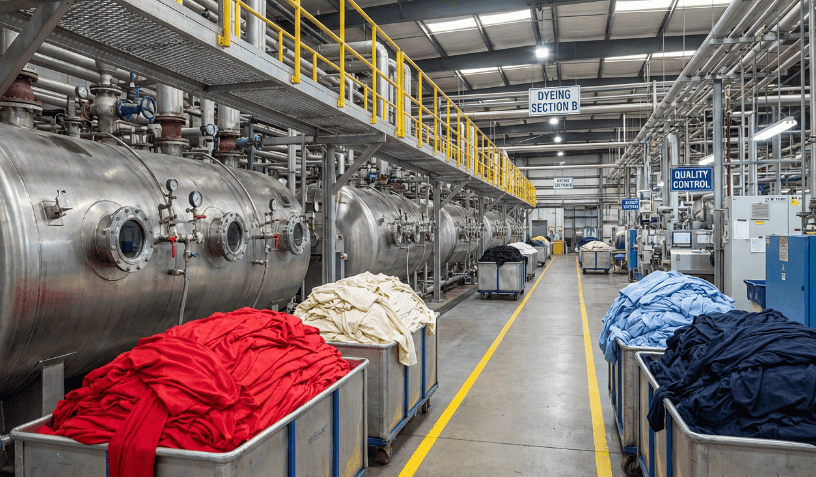
Poor scouring rarely announces itself in the preparation department — it reveals itself later, under production pressure, on the dye range. The symptoms are recognisable: side-to-centre shade variation, unlevelness between lots, and a growing list of recipes requiring manual shade correction. On cellulosic fabrics, residual waxes and pectins produce dull, uneven shades and poor wash-down performance. On blends, unremoved oils from synthetic components create barré and streaks that become especially pronounced in dark shades.
Common plant-floor signals that scouring is a hidden bottleneck include:
- Frequent shade additions or toning on the dye range to bring lots back into tolerance
- Higher re-dye rates on dark or critical fashion colours compared with pales
- Noticeable differences in handle and hydrophilicity between batches of the same article
- Growing customer feedback about shade drift, especially on repeat programmes
These symptoms often prompt adjustments to dyes, salt, alkali, or machine settings - when the real leverage point sits further upstream. Mills that stabilise their scouring chemistry consistently report narrower CIELAB spreads and more predictable shade build-up curves, even when greige quality varies between deliveries.
The Role of LABSA in Scouring and Wetting
Linear Alkyl Benzene Sulfonic Acid (LABSA) is an anionic surfactant widely used in scouring and wetting auxiliaries for woven and knitted substrates. Its molecular structure - combining a hydrophobic alkyl chain with a sulfonic acid head group - delivers strong detergency, emulsification, and wetting performance in alkaline liquors. In textile pre-treatment, these properties directly influence how effectively fibres interact with water, chemicals, and dyes.
In practical terms, LABSA helps mills:
- Lower surface tension of processing liquors, enabling faster penetration into compact yarns and dense fabric constructions, so alkali and chelants reach impurities more uniformly
- Emulsify and disperse spinning oils, sizing residues, and natural waxes, reducing redeposition and the risk of oily streaks on the fabric surface
- Improve soil suspension and rinsability, supporting brighter scoured whites and more consistent dye uptake in subsequent steps
- Maintain performance in hard-water and high-alkali conditions, ensuring reliable detergency across varying process water sources
Because LABSA is readily biodegradable, it also supports mills' efforts to reduce environmental impact and improve effluent quality — a practical advantage over older, less degradable surfactant chemistries.
From Research to the Production Line
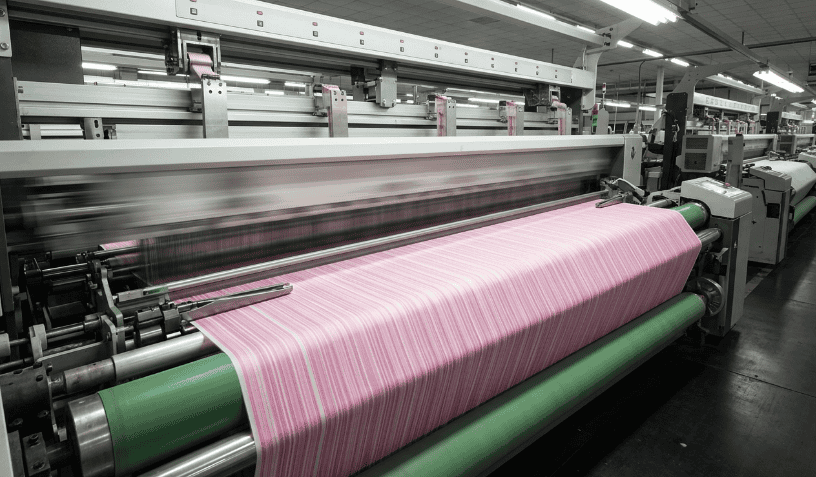
Evidence from multiple research studies supports the link between strong scouring performance and improved dye uniformity — a role that LABSA-based formulations are well positioned to fill in conventional processing lines. For mills not planning an immediate shift to bioscouring, upgrading the surfactant component of an existing alkaline scour is a practical, lower-risk route to the same end goal: cleaner, more evenly prepared fibre and fewer defects on the dye range.
Key research findings that support this include:
- Wetting and absorbency studies found that surfactants lowering surface tension more efficiently produce faster wetting and higher absorbency in hydrophobic cotton — behaviour that mirrors how LABSA-rich formulations perform in typical desize-scour baths.
- Research on the continuous scouring process (2024) showed that improved scouring efficiency led directly to better dyeing behaviour and a reduced need for shade correction, including smoother shade build-up across the fabric width.
- Pre-treatment optimisation studies on cotton-spandex blends demonstrated that well-controlled pre-treatment enables high whiteness and strong reactive dye performance, while reducing energy consumption by up to 70% versus conventional processes.
- Enzymatic scouring reviews confirm that even in enzyme-rich systems, auxiliary surfactants remain necessary to wet the substrate and remove hydrophobic impurities — supporting uniform enzyme action and consistent downstream dyeing.
Optimising Fiber Penetration: How Masda's LABSA Supports Textile Operations
Masda's Linear Alkyl Benzene Sulfonic Acid (LABSA) is a high-purity, brownish viscous liquid with strong water solubility and strong surface tension-lowering capability. Produced by sulfonating linear alkylbenzene, its linear molecular structure supports better biodegradability than older branched alkylbenzene sulfonates — an important consideration for mills managing effluent compliance and sustainability commitments.
In textile pre-treatment and dyeing operations, Masda's LABSA can be integrated as a core component of scouring and wetting auxiliary packages to help:
- Enhance penetration of caustic and peroxide into dense cotton or blended substrates, supporting more uniform removal of natural impurities and processing oils.
- Improve detergency in high-alkali, high-temperature baths, so scoured fabrics exit the preparation range cleaner and with more consistent hydrophilicity — a direct benefit for level dyeing.
- Maintain cleaning performance in hard-water conditions, important for mills drawing process water from variable sources.
- Simplify procurement — because Masda supplies LABSA for a wide range of industrial cleaning and detergent applications, mills can consolidate textile auxiliaries and plant maintenance chemistries with a single supplier.

Practical Outcomes and Next Steps
For manufacturers, the outcome of a stronger LABSA-based scouring system is straightforward: fewer re-dyes, tighter shade tolerances, reduced water and energy use per kilogram of saleable fabric, and more predictable right-first-time performance. As sustainability and cost pressures increase across the value chain, mills that refine their pre-treatment chemistry now will be better placed to meet brand requirements on quality, resource efficiency, and compliance.
If you are reviewing your current scouring and dyeing recipes, a focused trial comparing your existing surfactant package with a LABSA-optimised alternative - run on a representative style - can quickly reveal how much improvement is achievable under your plant conditions. The gains are often visible within the first production run. To find out more about Masda's LABSA and how it can be incorporated into your auxiliary formulations, contact our technical team for a consultation.