Even water that appears clear can still carry fine particles that affect downstream processes. These issues are not always visible at first, but they build over time and reduce overall system reliability.
So the real question is not whether water clarification matters. It is how to do it in a way that stays consistent, efficient, and reliable across changing conditions.
Aluminium sulphate remains one of the most widely used industrial chemical for addressing this issue. It has been used for decades, and when applied correctly, it delivers stable and predictable results across a wide range of water treatment applications.
What Aluminium Sulphate Does in Water
Aluminium sulphate, often called alum, plays a central role in coagulation and flocculation. These two steps form the foundation of most water clarification systems.
When aluminium sulphate dissolves in water, it releases positively charged aluminium ions. Most of the particles that cause turbidity carry a negative charge. This charge keeps them suspended and prevents them from settling naturally. Once aluminium ions are introduced, they neutralise these charges. The particles can then begin to come together instead of repelling each other.
At the same time, aluminium reacts with water to form aluminium hydroxide. This creates a soft, gel-like substance that acts like a net. It traps fine particles and pulls them together into larger clumps, known as flocs. These flocs become heavy enough to settle or to be removed more easily through filtration.
This combined effect improves water clarity and reduces the load on downstream treatment systems.
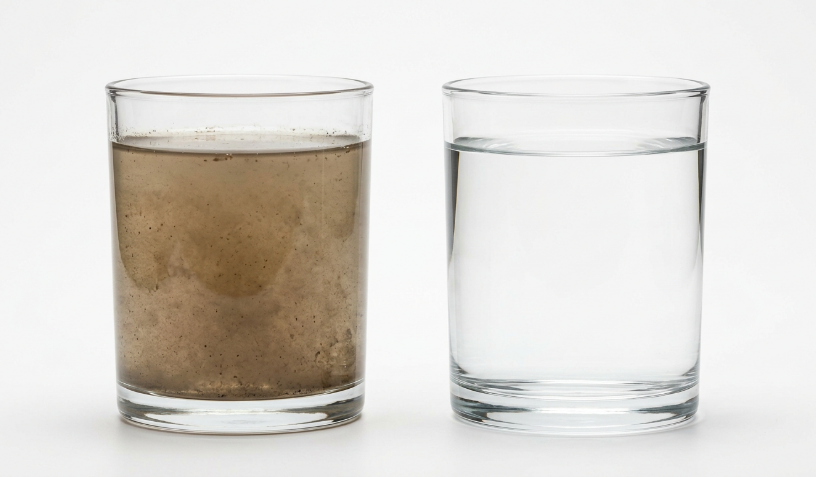
A year-long study published in Water (2024) demonstrated the effectiveness of this process. In highly polluted surface water, aluminium sulphate achieved turbidity reductions of more than 98 percent. It also reduced organic content, chemical oxygen demand, and nutrient levels. These improvements show that clarification is not only about appearance; it also plays a key role in overall water quality.
Why Turbidity Is More Than a Visual Issue
It is easy to treat turbidity as a cosmetic issue. In water treatment, it goes much deeper than that.
Suspended particles often carry organic material. This creates a suitable environment for microbial growth. Pathogens such as Escherichia coli, Salmonella, Listeria, and Cryptosporidium can attach to these particles. Once attached, they become harder to remove during disinfection.
This creates a gap in the treatment process. Disinfection alone cannot fully address the problem if turbidity remains high. The particles must be removed first.
Properly controlled aluminium sulphate dosing plays a key role in maintaining consistent clarification performance. When optimised, it helps reduce suspended solids effectively while supporting downstream treatment processes, including filtration and disinfection. This makes turbidity control a critical step in overall water treatment.
Beyond safety, turbidity also affects system performance. Residual organic matter can interfere with treatment processes, reduce efficiency, and increase operational costs. Even small variations in water quality can lead to noticeable differences in output consistency.
Getting the Dosage Right
Aluminium sulphate works best within a defined range. However, too little will not remove enough particles or too much can reduce efficiency and increase residual aluminium in treated water.
A study published in Desalination and Water Treatment (2024) showed that aluminium sulphate performs effectively up to a certain dosage threshold. Beyond that point, additional dosing does not improve clarity and can introduce new issues.
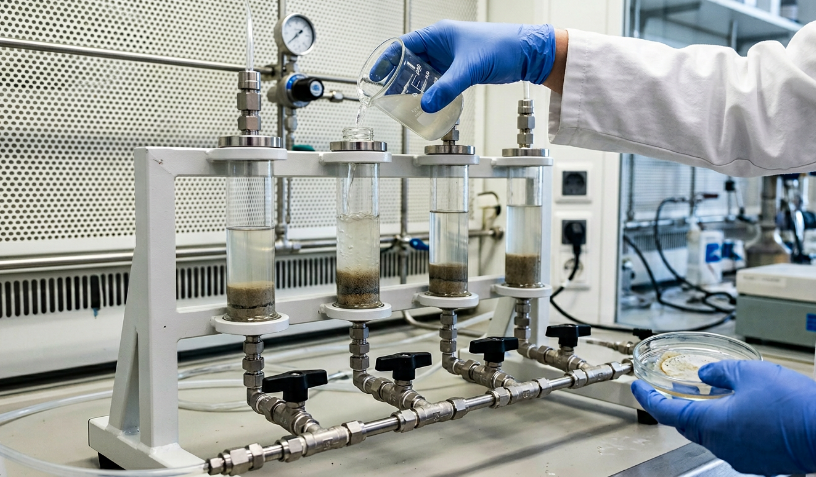
This is why jar testing remains essential. By testing different doses on actual water samples, operators can identify the level that delivers the best results under current conditions.
Further research in Applied Water Science (2022) showed that once dosage and pH are properly controlled, coagulation performance becomes highly predictable. This allows operators to move away from guesswork and towards data-based decisions.
In practice, this means dosing should not remain fixed. It should respond to changes in water quality, especially across seasons.
pH and Process Stability
pH plays a central role in how aluminium sulphate performs. The ideal range generally falls between 5.5 and 7.5.
Outside this range, performance drops. At lower pH levels, aluminium remains dissolved and cannot form the flocs needed for particle removal. At higher pH levels, the flocs can break apart, reversing the clarification process.
A study reported in the Journal of Water and Health (2024) shows that raw water conditions often shift with rainfall and seasonal changes. These shifts affect both turbidity and pH, which in turn influence coagulation performance.
In water treatment systems, pH should not be treated as a fixed parameter. Continuous monitoring and adjustment help maintain stable performance, even when incoming water conditions change.
Consistency of Supply and Its Impact on Performance
While process control is important, the consistency of the coagulant itself also matters. Variations in purity and alumina content can affect how aluminium sulphate performs in practice.
When composition varies, dosing requirements can shift. This leads to additional testing, recalibration, and potential inconsistencies in results.
For this reason, many operators prioritise consistent, high-purity materials. Specifications such as high purity and quality controls outlined by Masda Chemicals’ aluminium sulphate product information show how compositional consistency supports predictable treatment outcomes.
Practical Steps to Improve Water Clarification
Improving water clarification does not always require major system changes. In many cases, small adjustments can lead to better and more consistent results.
- Start by understanding your raw water. Measure turbidity, pH, alkalinity, and seasonal variation. These factors influence how aluminium sulphate will behave.
- Use jar testing regularly. Conditions change over time, so dosing should be reviewed rather than fixed.
- Maintain pH within the optimal range. Even small deviations can affect performance.
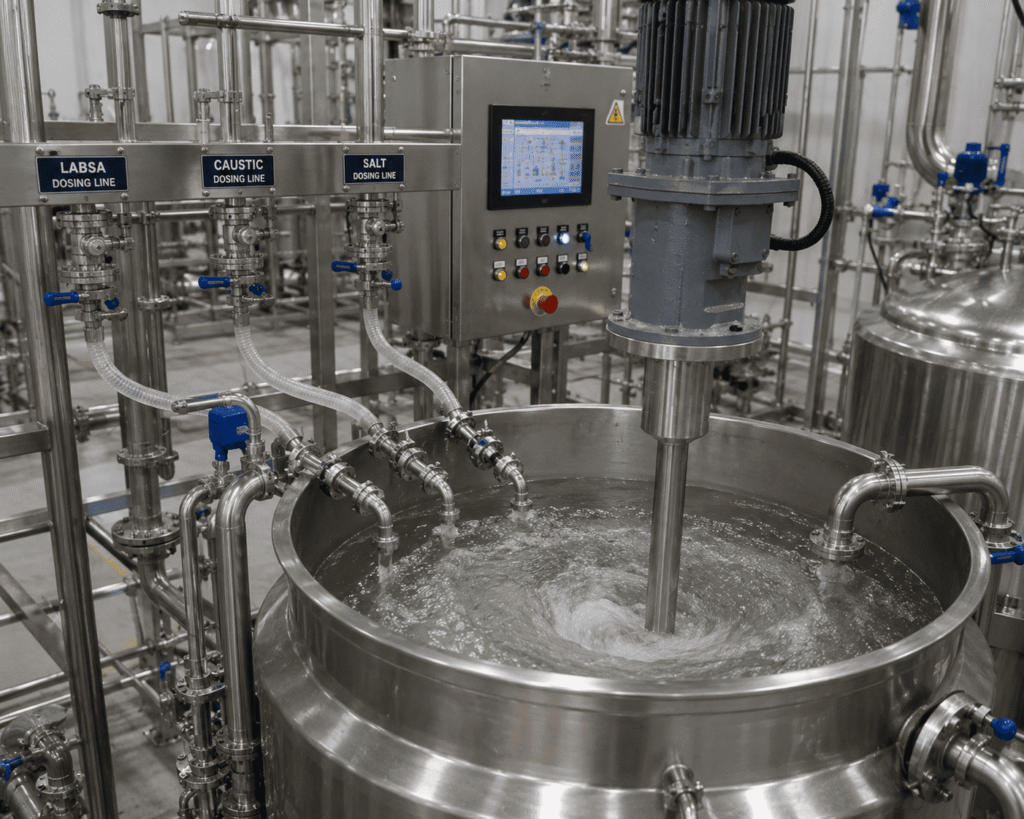
- Ensure proper mixing. Rapid mixing helps distribute the coagulant evenly, while controlled flocculation allows particles to combine without breaking apart.
- Monitor system performance continuously. Turbidity measurements provide immediate feedback on how well the process is working.
Keep clear records. Documentation supports compliance, audits, and ongoing improvement.
The Bottom Line
Turbid water remains one of the most common and underestimated challenges in water treatment. Aluminium sulphate offers a reliable way to improve clarity and reduce contaminants, but its effectiveness depends on how well the process is managed.
Consistent results come from controlling the key variables. These include dosage, pH, raw water quality, and the consistency of the materials used. When these elements are aligned, water clarification becomes stable and predictable rather than a recurring issue.
When water clarity starts to vary, it often points to something deeper in the process. Taking a closer look at coagulation conditions, pH control, and raw water quality can help ensure consistency and long-term reliability.