 Beverage quality checks are an important starting point when investigating differences in shelf-life performance between production batches.
A beverage passes its routine checks at filling. Yet several weeks later, one batch develops an off-flavour or unexpected gas. Another batch made with the same recipe remains acceptable. For the quality team, the problem is no longer whether the product looked right when it left the line. It is why the two batches behaved differently.
Sodium benzoate is a preservative used in some acidic drinks to limit the growth of spoilage microorganisms, including certain yeasts and moulds. It can help protect a beverage during storage, but it does not sterilise the product. Nor can it compensate for contamination introduced during processing. Its performance also depends on the finished drink’s acidity.
Increasing sodium benzoate is not necessarily the most useful starting point. The right response depends on what changed between the affected batch and the acceptable one. In many cases, one of the first questions is whether the finished beverage still provides the same conditions for the preservative to work.
Key Takeaways
- Check finished-product pH against an acceptable batch. Sodium benzoate works partly through benzoic acid, and the proportion in that active form decreases as pH rises.
- Use the spoilage pattern to narrow the cause. Ingredient variation, tolerant yeasts, filling contamination and storage conditions require different checks and responses.
- Prove the correction in the packed drink. Confirm microbiological performance, processing and storage conditions, ingredient compatibility and the applicable legal requirements.
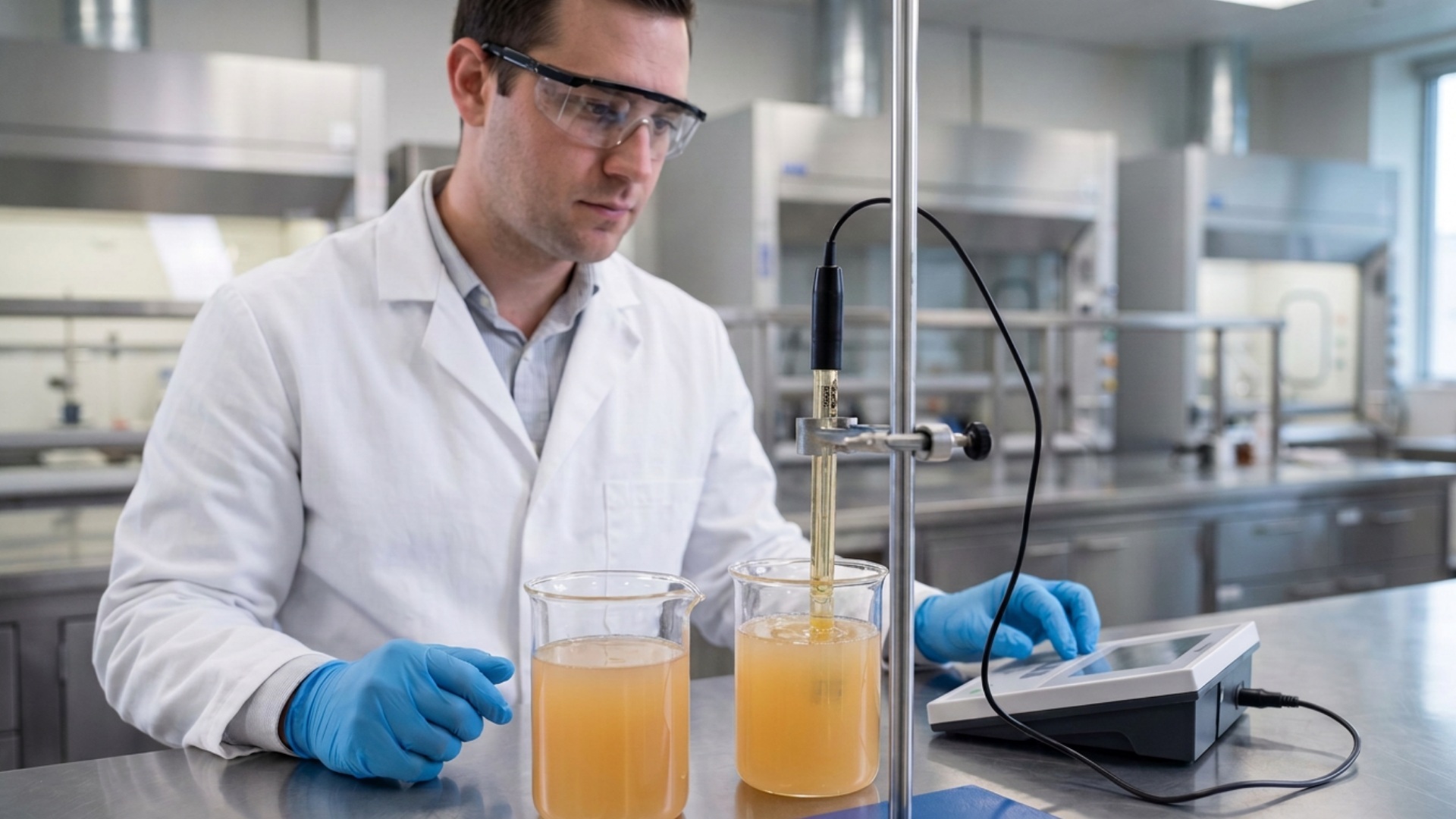 Comparing beverage pH between production batches helps identify changes that may affect sodium benzoate's preservative performance.
Start With the pH of the Affected Beverage
If two batches contain the same sodium benzoate addition, the next question is whether they provide the same conditions for that preservative to perform as intended. One of the first places to look is finished-product pH.
That matters because sodium benzoate behaves differently at different pH levels. When sodium benzoate dissolves in a beverage, it releases benzoate ions. In acidic conditions, some of these ions form benzoic acid, which plays an important role in inhibiting spoilage microorganisms. The more acidic the beverage, the greater the proportion present as benzoic acid.
In other words, the same preservative addition may provide less inhibition if the beverage becomes less acidic. The point is supported by a study of spoilage yeasts in cold-filled drinks. Growth varied with pH, sugar, titratable acidity and the tested combinations of sodium benzoate and potassium sorbate. Those findings support assessing the whole formulation, not copying a dose or pH target from the study.
Compare the affected finished drink with a batch that met the same specification. Check actual additions and final blending records. For a like-for-like pH comparison, sample at the same production stage and use the same method at comparable temperatures. Then measure at defined points after blending, processing and during storage if the aim is to locate when the pH changed.
If pH has moved outside its established range, the next decision concerns the fruit preparation, acid system or blending controls. Restoring the validated acidity may be appropriate, but flavour and product quality still need consideration. A lower pH is not automatically better.
What if both batches are already within the expected pH range? The preservative chemistry may be unchanged, but the microbial challenge may not be.
When pH Is on Target, Follow the Spoilage Pattern
If pH remains within specification, the next question is whether the microbial challenge has changed.
Gas formation can be consistent with yeast fermentation. Saccharomyces cerevisiae is one yeast relevant to spoilage in certain beverages; moulds may matter in others. Neither the appearance of a swollen pack nor an off-flavour identifies the organism. Testing must establish what is present and whether it is related to the failure.
The appropriate response may also depend on the organism itself.
The timing and distribution of affected packs can point the team towards the most useful records and tests:
| What the team sees | Possible direction | First useful check |
| Shelf life drops after a fruit-base or flavour change | Acidity or incoming microbial load may differ | Compare finished pH, ingredient lots and recovered organisms |
| Runs made to the same recipe fail inconsistently | Dosing, raw materials or production conditions may vary | Reconcile actual additions, lot records, filling data and microbiology |
| Spoilage appears after filling | Filling contamination or package integrity may be involved | Review sanitation, filling conditions, closures and environmental results |
| Only some stored packs deteriorate | Storage exposure or pack variation may matter | Compare retained packs, distribution history and packaging lots |
| Increasing preservative makes little difference | Preservative level may not be the main cause | Identify organisms; recheck pH, contamination routes and processing |
These patterns identify where to look, not what caused the failure. Gas-producing packs warrant microbiological testing. Failures clustered around a single filling run put sanitation, line settings and closures under closer scrutiny.
Once the evidence points towards formulation, organism tolerance or a production fault, the decision changes. It is no longer “should we add more preservative?” It is “which correction addresses the cause?”
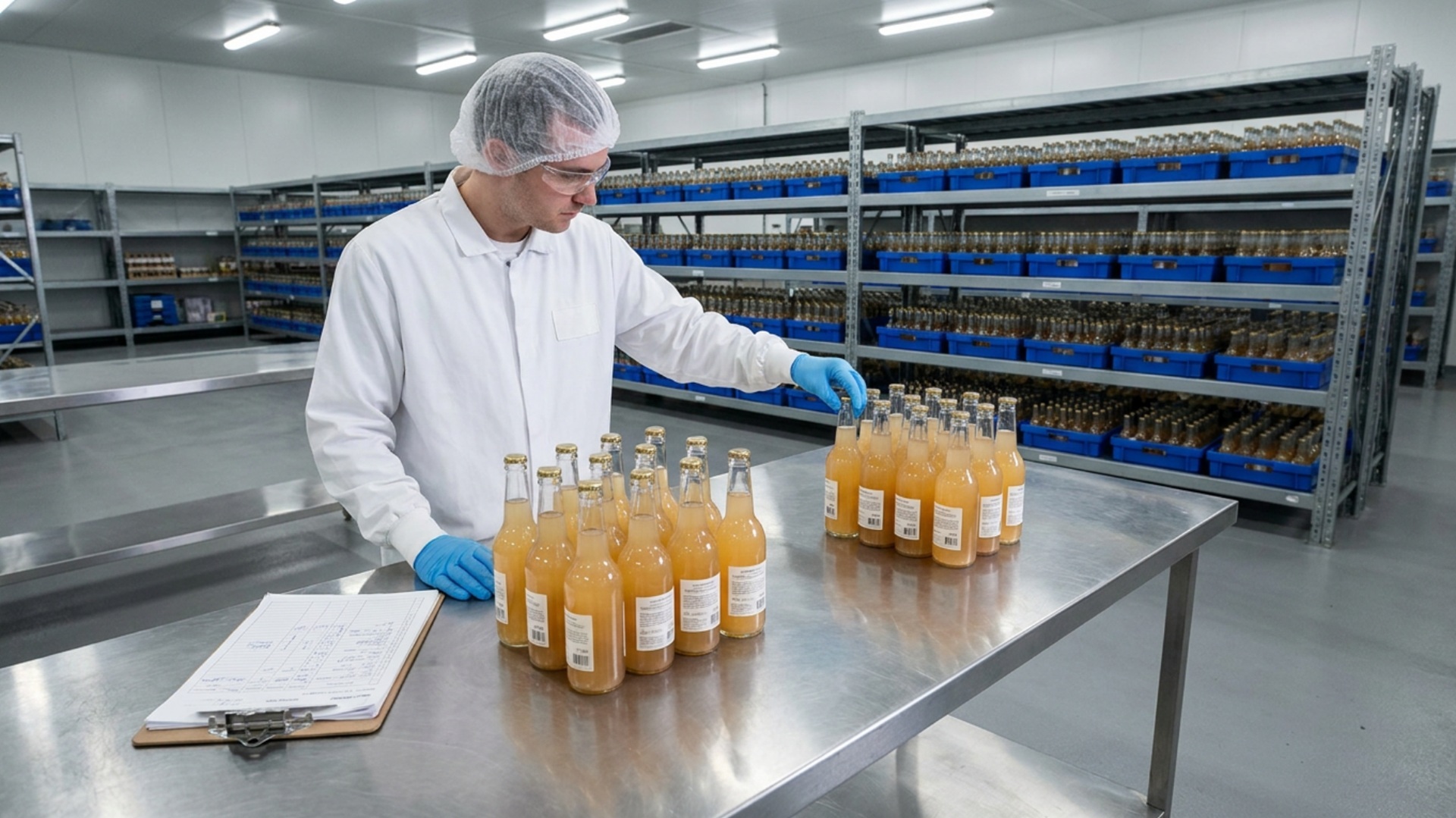 Comparing retained samples alongside batch records can help quality teams identify patterns when beverage shelf-life results vary between production runs.
Choose a Correction That Matches the Cause
For a confirmed pH shift, review the acidulant, fruit preparation and blending procedure. The aim is to restore an appropriate, validated formulation - not to make the beverage as acidic as possible. Any proposed change must still meet flavour and product-quality requirements.
If contamination continues to enter the beverage during filling, a higher sodium benzoate level may have little effect on the underlying fault. The response is to examine sanitation effectiveness, filling practices, processing conditions and package seals. Correct the identified weakness, then assess preservation under those corrected conditions.
A recovered organism that is difficult to control at the intended pH raises a different question. Research and development (R&D) may need to revisit validated processing conditions or consider another permitted preservative system. Masda Chemical’s article on potassium sorbate offers context on another weak-acid preservative. It is not a substitute to use at the same addition level without product-specific evaluation.
Keep corrective trials focused. Compare the affected or original product with a defined change wherever practical. If pH, preservative level and filling conditions are all altered at once, even a successful trial may not reveal which action solved the problem.
A promising trial identifies a possible solution. The remaining question is whether that solution will perform after commercial filling, packaging and storage.
Test the Correction in the Beverage That Will Be Sold
Identifying a likely correction is only part of the process. The next question is whether that correction will perform under commercial production and storage conditions.
For a pH-related problem, follow readings at defined process stages and during storage, together with sensory quality. If microorganisms were recovered, use suitable microbiological work to identify the relevant organisms and assess control by the revised system. If filling or packaging was implicated, test those corrected conditions as part of the validation.
A challenge test may be suitable for a new or substantially changed preservation system. ISO 20976-1:2019 describes growth-study protocols for specified microorganisms, with possible application to certain yeasts. It does not give every beverage a universal passing criterion. A competent laboratory must select organisms, conditions and assessment criteria for the particular drink.
Shelf-life trials also need the intended package and realistic storage exposure. Record the formulation, pH, microbiology, processing settings and acceptance criteria together. The results should show what improved—and what the next production run must reproduce.
Even if the beverage passes these tests, commercial approval is not complete. An effective preservation system must also be suitable alongside the drink’s other ingredients.
Check the Vitamin C Combination Before Approval
Validation may show that the preservation system controls spoilage. But commercial approval is not necessarily complete. Another question remains: are all ingredients in the formulation compatible under the intended processing and storage conditions? This is particularly relevant for beverages containing vitamin C (ascorbic acid) or erythorbic acid.
The US Food and Drug Administration’s beverage guidance explains that benzene, a recognised human carcinogen, can form at very low levels in some drinks containing benzoate salts with ascorbic or erythorbic acid. Heat and light can encourage its formation under certain conditions. This does not mean every beverage containing these ingredients forms benzene or is unsafe.
The FDA detected elevated benzene levels in a small number of beverages. Manufacturers reformulated affected products, and follow-up tests found lower levels. For beverage manufacturers, the lesson is to assess the ingredient combination in the finished drink, including heat during processing and possible light exposure during storage. That assessment can help determine whether targeted testing or reformulation is needed.
Carry the Approved Formulation into Routine Production
A formulation that performs well during testing must also deliver consistent results in commercial production. For sodium benzoate, this requires control over the material purchased and used from one production run to the next.
Before approving a supplier, R&D, quality and procurement teams should confirm material identity, relevant impurity limits, certificates of analysis, packaging and batch traceability. These records help manufacturers check incoming materials and investigate differences between production batches.
Regulatory compliance is a separate requirement. The Singapore Food Agency’s additive guidance requires businesses to check the relevant food category and additive limits. Manufacturers must also review the Singapore Food Regulations, including the rules for combined Class II preservatives where applicable, and requirements in intended export markets. No single sodium benzoate concentration can be assumed suitable or permitted for every beverage.
The final step is to keep the approved formula, ingredient specifications, processing conditions and shelf-life acceptance criteria together. These records give production teams a clear reference for maintaining consistent results. If a quality problem occurs later, they also provide a starting point for tracing the cause rather than immediately adjusting the preservative level.
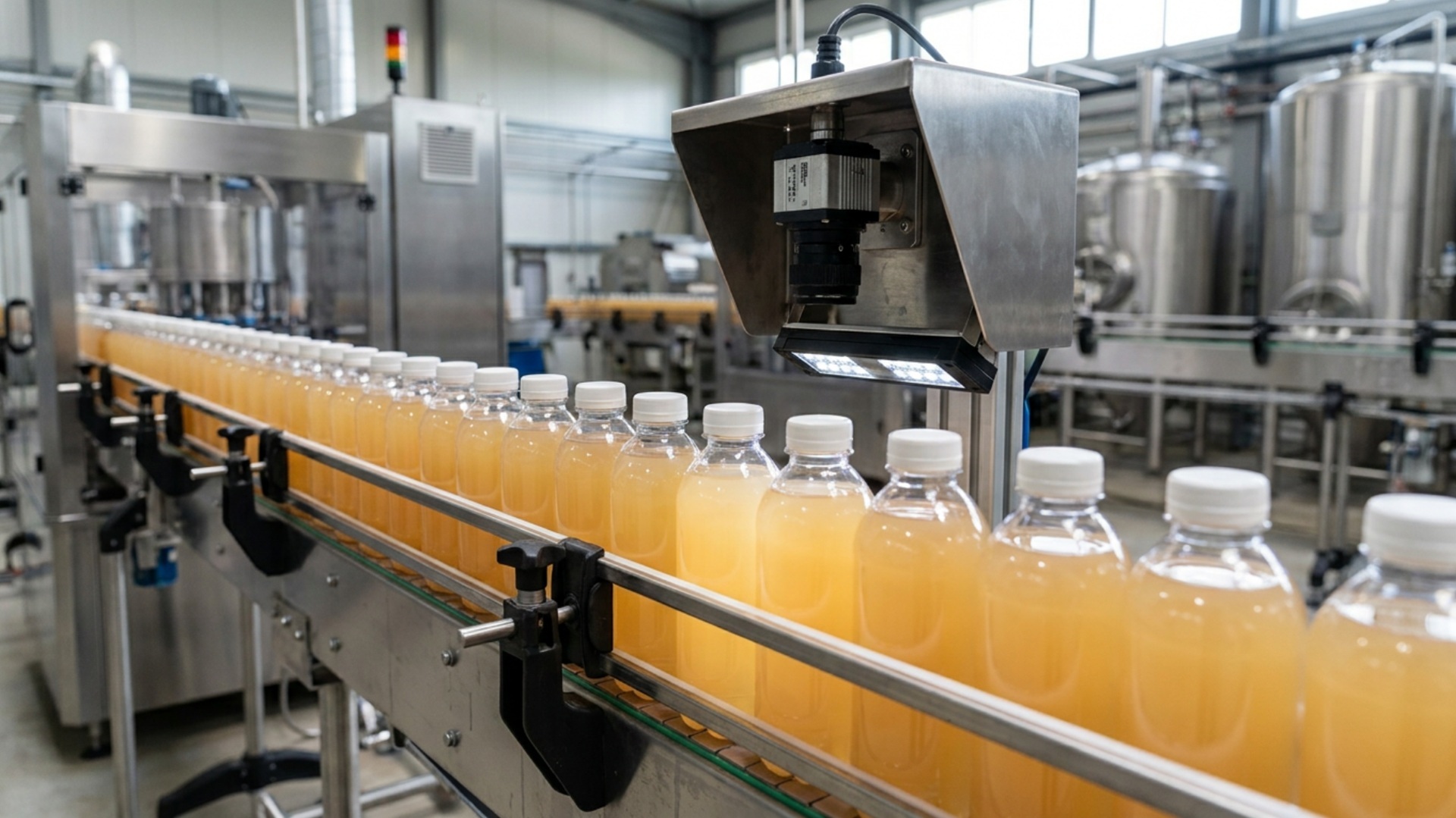 Automated inspection supports consistent packaging quality as finished beverage bottles move through production.
Consistent Shelf Life Starts with the Right Decision
When one beverage batch spoils early, adding sodium benzoate may not address the cause. A pH shift, a tolerant yeast, contamination during filling and unsuitable storage conditions each call for different evidence—and different corrections.
Start with the failure pattern, confirm the cause and test a focused response in the finished pack. Then carry the validated formulation and production conditions into routine manufacture. That is how an acceptable shelf-life result becomes one the team can work to repeat.