For commercial bakeries and food manufacturers, mould is more than a quality concern. Every spoiled product can disrupt distribution, reduce profitability, and affect customer confidence. At the same time, manufacturers must balance freshness, food safety, regulatory compliance, and production efficiency while maintaining consistent product quality. As a result, shelf life remains one of the most important performance indicators in commercial bakery production.
To address these challenges, manufacturers rely on proven preservation strategies. Among the most widely used bakery preservatives is calcium propionate. It helps inhibit mould growth, extends shelf life, and integrates easily into commercial bakery production without significantly affecting product flavour or fermentation. These characteristics continue to make it a trusted preservative for maintaining the quality and safety of baked goods throughout their intended shelf life.
Why Mould Remains a Challenge in Bakery Products
Mould spores occur naturally in the environment and are difficult to eliminate. Although baking temperatures destroy most microorganisms present in dough, freshly baked products still retain moisture, nutrients, and a pH range that can support mould growth once they begin cooling.
Even with excellent sanitation practices, bakeries cannot completely eliminate airborne mould spores. Instead, commercial manufacturers focus on limiting the conditions that allow mould to develop after baking and packaging.
The challenge becomes even greater in warm and humid climates, where bakery products often spend several days moving through distribution networks or sitting on retail shelves before reaching consumers. These extended storage and distribution periods create additional opportunities for mould to grow if products are not properly preserved.
Mould is also more than a cosmetic defect. It affects consumer confidence, product quality, and brand reputation. Even if visible growth appears on only one part of a loaf, the entire product is considered unsuitable for sale. For manufacturers, this translates directly into increased waste, product returns, and avoidable financial losses.
In addition to mould, bacterial rope spoilage remains another significant microbial concern in packaged bread. Caused primarily by Bacillus species, rope spoilage produces sticky crumb texture, unpleasant odours, and visible deterioration that makes products unacceptable for sale.
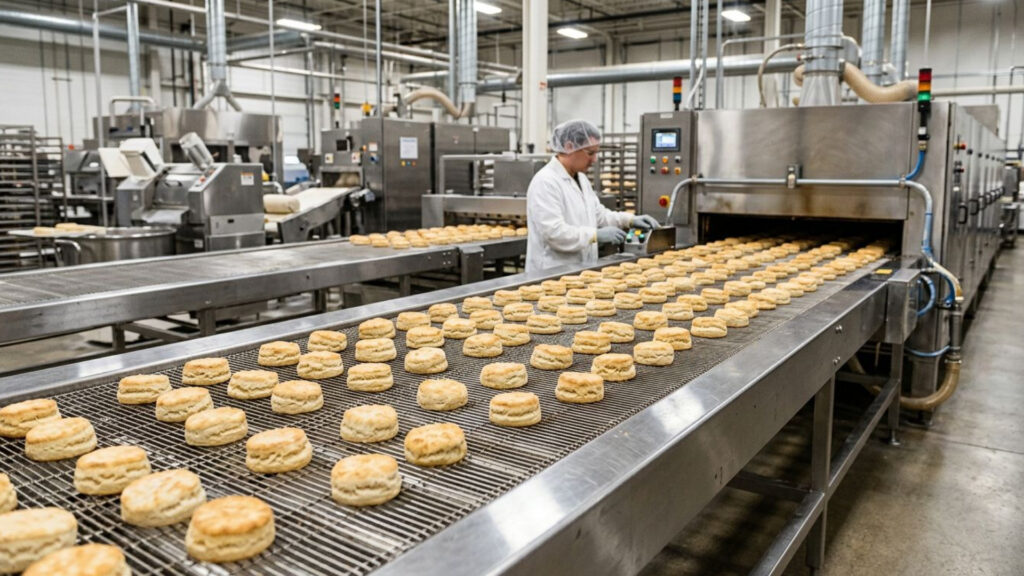
For these reasons, preservative systems remain an important part of commercial bakery formulations. Rather than replacing good manufacturing practices, they complement hygienic production, appropriate packaging, and controlled storage conditions to minimise spoilage and support consistent product quality.

How Calcium Propionate Works in Bakery Preservation
Calcium propionate is the calcium salt of propionic acid and is widely recognised as food additive E282. It acts as an antimicrobial preservative by inhibiting the growth of moulds and certain spoilage bacteria that commonly affect bakery products.
Unlike some preservatives that may alter flavour or interfere with fermentation, calcium propionate provides several practical advantages for commercial baking.
Key benefits include:
- Inhibits mould growth
- Helps prevent rope spoilage caused by Bacillus species
- Maintains the product's original taste and aroma
- Extends shelf life without introducing a strong preservative flavour
- Has minimal impact on baker's yeast when used at recommended levels
- Integrates easily into existing bakery formulations
Its effectiveness depends largely on product pH. Calcium propionate performs best in slightly acidic bakery products, where a greater proportion of the preservative remains in its active antimicrobial form.
Typical usage levels range from 0.1% to 0.4% of the flour weight, although the exact dosage depends on product formulation, target shelf life, manufacturing conditions, and applicable food regulations. Manufacturers should always follow local regulatory requirements, as permitted usage levels may vary across product categories.
How It Supports Shelf Life
Food manufacturers continue to evaluate a range of preservation strategies, including modified atmosphere packaging, cultured wheat ingredients, fermented preservatives, and clean-label alternatives. Despite these developments, calcium propionate remains widely used because it combines proven effectiveness with operational simplicity and consistent performance.
Unlike refrigeration, which increases storage and transportation costs, calcium propionate helps protect bakery products throughout normal ambient distribution. It also integrates easily into high-volume manufacturing without requiring significant changes to existing production equipment, making it a practical solution for commercial bakeries.
Its antimicrobial performance depends on several factors, including product formulation, pH, moisture levels, and process controls. Slightly acidic bakery products generally provide the conditions needed for optimal activity, with published references reporting particularly good performance below pH 5.5.
Another important advantage is its selectivity. Calcium propionate suppresses moulds and rope-forming bacteria while having minimal impact on baker's yeast. This allows normal dough fermentation to continue while protecting finished products during storage and distribution.
However, not all bakery products face the same spoilage challenges. Lean breads, soft rolls, sliced loaves, and filled pastries each differ in moisture content, formulation, and shelf-life requirements. As a result, selecting an appropriate preservative depends on the product itself, the expected storage conditions, and the manufacturer's preservation objectives.
For bakery manufacturers, calcium propionate provides the greatest value where mould control is the primary concern and product formulation supports its antimicrobial performance. When combined with good manufacturing practices, appropriate packaging, and controlled storage conditions, it helps maintain product quality while supporting longer shelf life throughout the supply chain.
Scientific Evidence Supporting Calcium Propionate
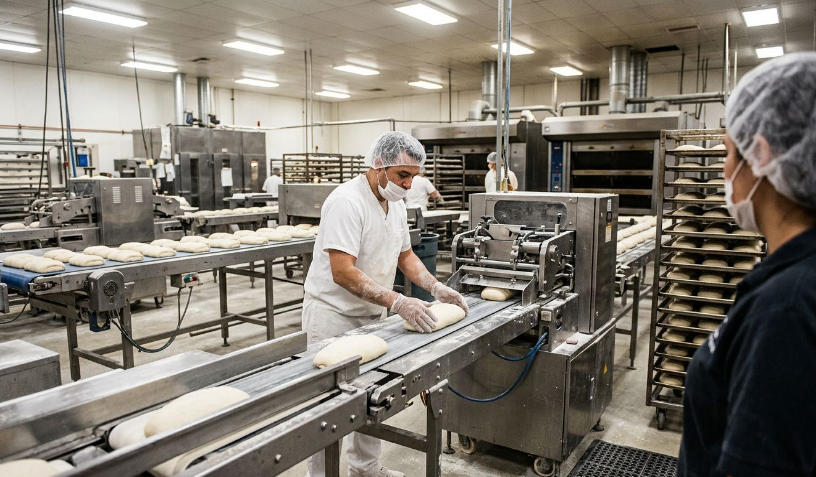
Calcium propionate remains one of the most extensively studied preservatives used in commercial baking. Research consistently supports its ability to inhibit mould growth and extend the shelf life of bakery products when used as part of an appropriate preservation strategy.
A study indexed on PubMed evaluated the effectiveness of calcium propionate in bread preservation and reported that incorporating 0.3% calcium propionate extended shelf life to 10–12 days under the study conditions. These findings demonstrate its ability to effectively delay mould growth when incorporated into well-formulated bakery products.
The researchers also observed that sourdough systems containing selected antifungal cultures achieved shelf lives of approximately 12–14 days. Rather than positioning these approaches as alternatives, the findings highlight an important principle in commercial baking: combining complementary preservation strategies can further enhance product stability and shelf life.
Additional evidence supporting the continued use of calcium propionate comes from researchers at Mahidol University in Thailand. After analysing 22 retail bread samples, the researchers confirmed that calcium propionate remains widely used in commercial bakery production because of its reliable and consistent preservative performance.
As part of the same research, the team developed a rapid analytical method for measuring calcium propionate in commercial bread. The method produced results that closely matched those obtained using high-performance liquid chromatography (HPLC), providing manufacturers with a practical tool for monitoring preservative levels and strengthening quality assurance programmes.
Together, these studies reinforce calcium propionate's long-established role in bakery preservation while demonstrating its continued relevance in modern commercial production.
Why Calcium Propionate Quality Still Matters for Bakery Manufacturers
Selecting the right preservative involves more than choosing the correct ingredient. Achieving consistent preservation also depends on product quality, manufacturing standards, and a reliable ingredient supply.
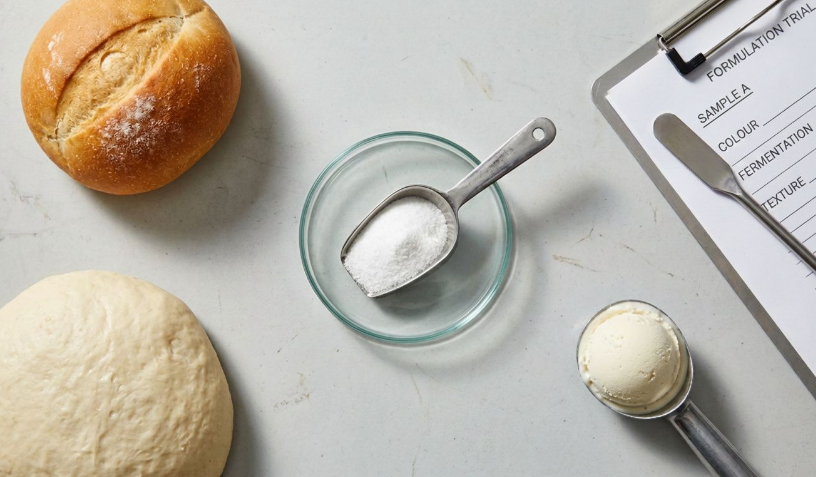
Variations in purity, particle size, and manufacturing consistency can influence how evenly calcium propionate disperses throughout the dough and how effectively it performs during production. For this reason, manufacturers benefit from sourcing food-grade ingredients that meet recognised food safety standards and deliver consistent quality from batch to batch.
Beyond its antimicrobial performance, calcium propionate also offers important formulation advantages. Its neutral taste and odour allow bakery developers to control mould growth without significantly affecting crumb softness, flavour balance, or the overall eating experience. This makes it suitable for a wide range of bakery products where flavour consistency remains important.
As highlighted on Masda Chemical's calcium propionate product page, its neutral sensory profile supports commercial bakery formulations that require effective mould control while maintaining product quality and flavour integrity.
However, even a high-quality preservative cannot compensate for poor manufacturing practices. Clean production lines, proper cooling, hygienic handling, and suitable packaging all remain critical components of an effective shelf-life programme.
The most consistent results are achieved when high-quality ingredients are combined with well-controlled production processes and good manufacturing practices. Together, these measures help maximise preservative performance while supporting product quality, food safety, and shelf-life consistency.
How to Use Calcium Propionate Effectively
The effectiveness of calcium propionate depends not only on dosage but also on several formulation and processing factors. Manufacturers typically evaluate product characteristics, processing conditions, and storage requirements when developing an effective mould control programme.
Product pH
Calcium propionate performs most effectively in slightly acidic bakery products because a greater proportion of the preservative remains in its active antimicrobial form.
Products with higher pH values may require formulation adjustments or complementary preservation strategies to achieve the desired shelf life. Many commercial bakeries routinely monitor dough pH alongside preservative levels to maintain consistent product quality across different production batches.
Water Activity
Moisture plays an important role in mould development. Bakery products with higher water activity provide more favourable conditions for mould growth, increasing the risk of spoilage during storage and distribution, particularly over extended shelf lives.
Managing water activity through formulation adjustments, ingredient selection, and appropriate packaging would help create less favourable conditions for microbial growth. These measures can also enhance the effectiveness of calcium propionate while maintaining product texture, freshness, and overall eating quality.
Manufacturing Hygiene
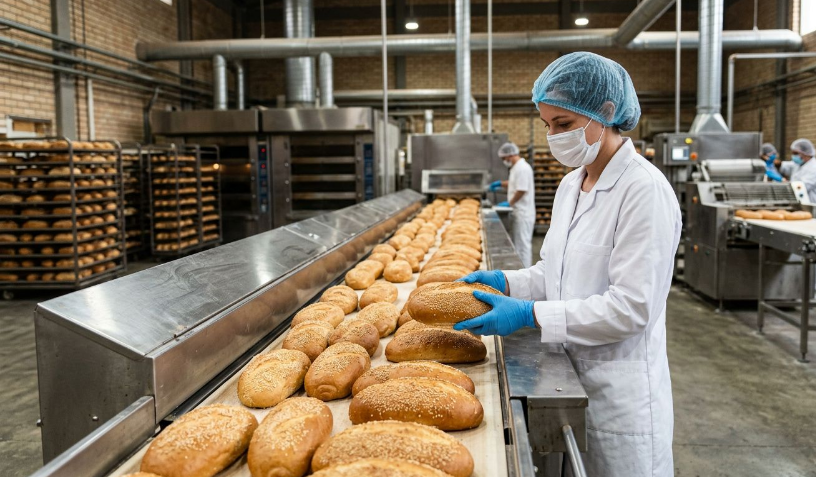
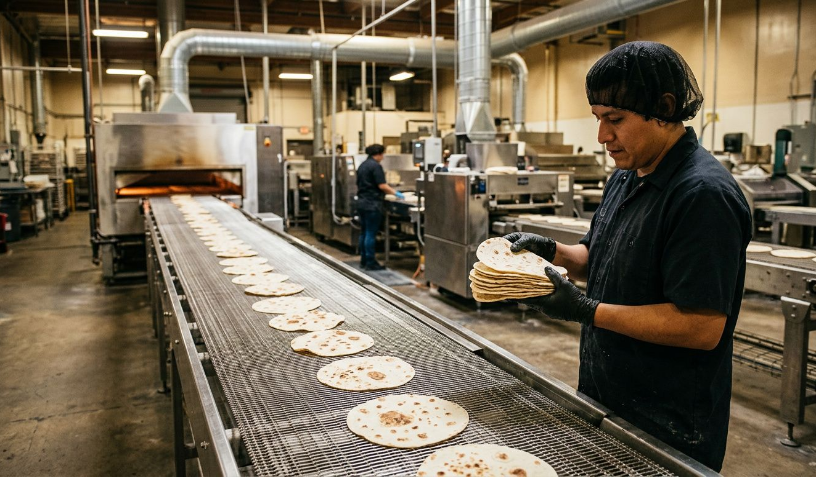
Even the most effective preservative cannot compensate for poor hygiene practices. While preservatives help inhibit microbial growth, bakery products remain vulnerable to contamination after baking, particularly during cooling, slicing, and packaging.
Airborne mould spores introduced during these stages can settle on finished products, making effective sanitation and contamination control essential. Maintaining clean production environments, regularly sanitising equipment, and minimising post-baking contamination remain fundamental parts of an effective mould prevention programme.
This approach is consistent with guidance from the American Institute of Baking (AIB) International, which identifies cooling and packaging as critical control points where bakery products are most susceptible to environmental contamination. As a result, robust sanitation, environmental monitoring, and good manufacturing practices play an essential role in reducing microbial risks and supporting longer product shelf life.
Packaging and Storage
Packaging is another key factor influencing shelf life. It helps protect bakery products from environmental moisture and external contaminants that can contribute to microbial spoilage during storage and distribution.
Moisture-resistant packaging reduces exposure to humidity, while appropriate storage temperatures help slow microbial growth throughout distribution and retail storage. Together, these measures create conditions that support the effectiveness of calcium propionate and other preservation strategies
Rather than relying on a single preservation method, commercial bakeries achieve the best results by combining effective packaging, good manufacturing practices, and calcium propionate. This multi-layered approach establishes multiple barriers against mould development, helping maintain product quality and extend shelf life throughout the supply chain.

Looking Ahead: Balancing Shelf Life with Changing Consumer Expectations
Consumer expectations continue to evolve. Today's shoppers expect bakery products to remain fresh for longer while maintaining consistent quality, food safety, and product appearance. At the same time, manufacturers continue exploring formulation strategies that balance shelf life, ingredient functionality, production efficiency, and changing market preferences.
Although alternative preservation technologies continue to emerge, calcium propionate remains one of the most widely adopted and extensively researched bakery preservatives. Its proven effectiveness, compatibility with commercial baking processes, and long history of safe use continue to make it an important component of modern bakery production.
Rather than relying on preservatives alone, many manufacturers now adopt a multi-layered preservation strategy that combines good manufacturing practices, effective sanitation, appropriate packaging, and carefully selected food ingredients. Together, these measures help reduce spoilage, minimise food waste, and maintain consistent product quality from production through to consumption.
For manufacturers reviewing their bakery formulations or looking to improve shelf life, selecting the right preservative should form part of a broader preservation strategy. Working with experienced ingredient suppliers can help ensure preservative selection aligns with product formulation, production processes, and distribution requirements while supporting consistent commercial performance.