When cakes begin to vary in height or biscuits come out darker than expected, changing the sodium bicarbonate level may seem like an obvious place to start. In commercial production, however, the same problem can have several causes. Leavening acids, mixing, holding time and oven conditions can all affect how a formulation rises and browns.
This makes troubleshooting difficult for research and development (R&D), production and quality teams. Sodium bicarbonate influences both chemical leavening and pH, but changing it without understanding the wider formulation can correct one quality problem while creating another.
Manufacturers therefore need to look at how sodium bicarbonate is behaving within the complete formulation and process. Understanding that relationship makes it easier to decide whether the ingredient level needs changing or whether the cause lies elsewhere in production.
Key Takeaways
- Sodium bicarbonate needs to work with the available acidity in the formulation. The balance affects carbon-dioxide generation, pH and finished-product quality.
- Excess residual bicarbonate can raise pH and contribute to stronger browning or an alkaline flavour, but baking conditions can produce similar colour problems.
- Before changing the formulation, manufacturers should compare affected batches with acceptable production runs and look for changes in ingredients, mixing, product dimensions and oven conditions.
How Sodium Bicarbonate Affects Rise
Sodium bicarbonate acts as a chemical leavening base. In formulations containing suitable acids, it reacts to release carbon dioxide. The gas expands air cells within the batter or dough and contributes to the volume and internal structure of the baked product.
For consistent results, however, producing carbon dioxide is only part of the process. The formulation must generate and retain enough gas while the product structure is developing.
The US Department of Agriculture's sodium bicarbonate technical report explains that sodium bicarbonate is commonly used with leavening acids. Unreacted or partly reacted bicarbonate can affect the finished product's pH, colour and taste.
The amount and behaviour of the acid therefore matter alongside the amount of sodium bicarbonate. Other acidic ingredients in the formulation can also contribute to the balance.
This means adding more sodium bicarbonate is not necessarily the answer when a product is too flat or rises unevenly.
A 2023 pound-cake study illustrates the point. Researchers varied the level of baking powder and the proportions of two leavening acids. They found differences in batter pH, cake volume, porosity and crumb structure. Higher baking-powder levels did not continue to increase volume indefinitely under the conditions tested.
The exact results apply to the formulation studied, not to every commercial cake. The practical lesson is more useful: leavening performance depends on the balance between the base, the acid and the structure of the product. Increasing one component without considering the others may not improve rise.
Why Uneven Rise Is Not Always a Sodium Bicarbonate Problem
If the formulation has been producing acceptable results and uneven rise suddenly appears, the investigation should extend beyond the sodium bicarbonate level.
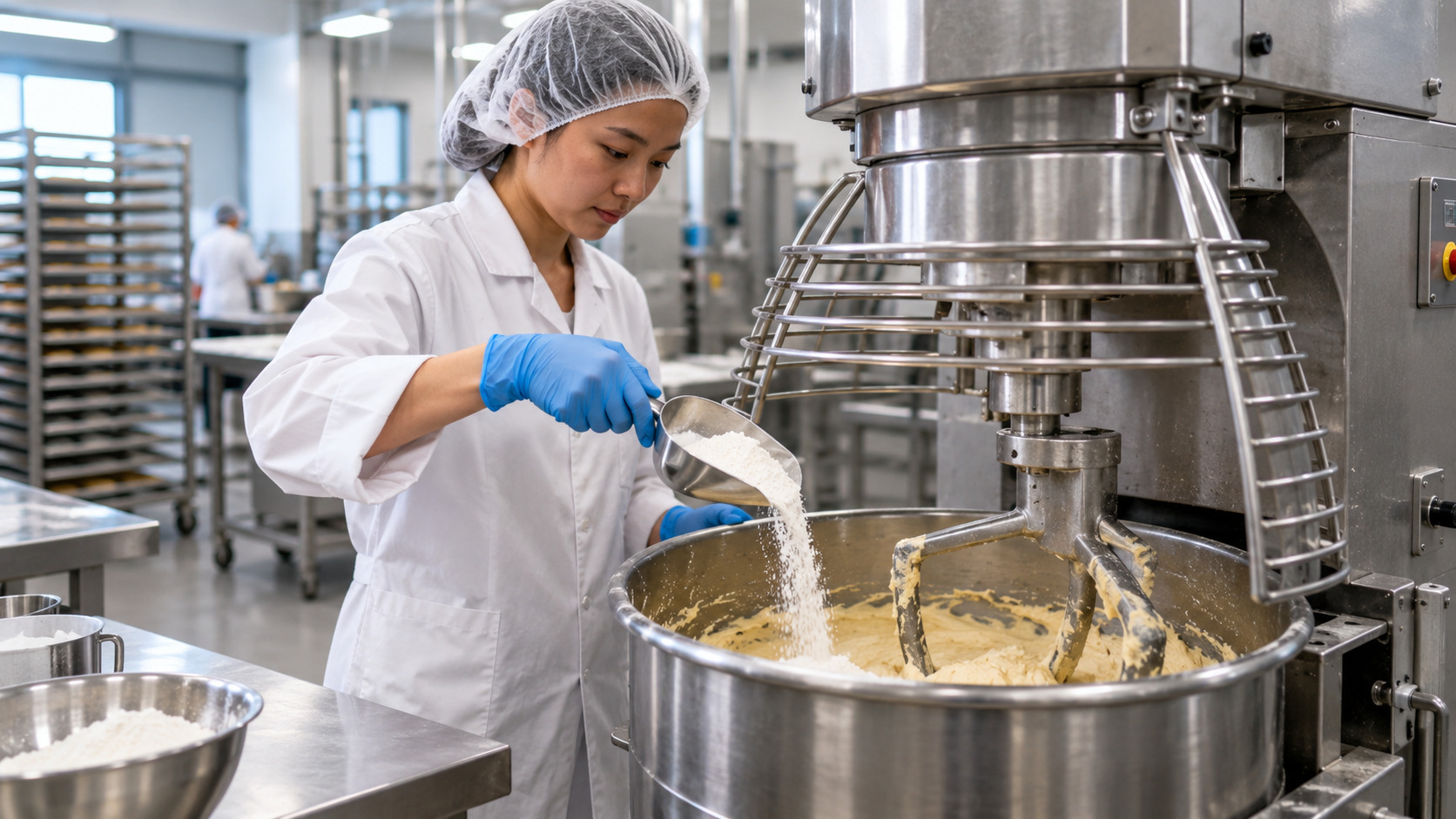
Mixing is one area to check. Air introduced during mixing provides spaces that can expand as leavening gases are released. Changes in mixing time, speed, batch size or ingredient addition can therefore affect the structure entering the oven.
Holding time can matter as well. Where part of the leavening reaction begins after the ingredients are hydrated, an unexpected delay between mixing and baking may allow more gas to escape before the product reaches the oven.
Product preparation creates another possible source of variation. Differences in deposit weight, dough thickness or piece dimensions can affect heating and expansion. If products enter the oven at different sizes, they may not develop the same height even when the formulation is identical.
For production teams, the pattern of the defect can provide useful clues. If poor rise affects an entire batch after a formulation change, the leavening system deserves close attention. If the problem affects only part of the line, equipment or oven conditions may be the better place to start. However, if the problem fluctuates between batches or throughout a production run, the cause is more likely related to timing or other process conditions.
How Sodium Bicarbonate Can Affect Browning
Sodium bicarbonate can also influence the colour of baked products because it affects pH. If more bicarbonate remains unneutralised, the product can become more alkaline.
Higher pH can encourage Maillard browning, the group of reactions between reducing sugars and amino compounds that contributes to colour and flavour during heating. Temperature, baking time and moisture conditions also affect how quickly browning develops.
The relationship between sodium bicarbonate, pH and colour has been observed directly in bakery formulations. In a chocolate-cake study, cakes prepared with sodium bicarbonate had a higher extractable pH and darker colour than formulations prepared with baking powder under the tested conditions.
The study does not provide a bicarbonate target for other cakes, biscuits or bakery products. It does support an important troubleshooting point: when a product becomes unexpectedly dark, pH and leavening balance are worth checking together.
Too much residual alkalinity can also affect flavour. The same USDA technical report notes that excess sodium bicarbonate can also contribute to an alkaline taste sometimes described as “soda bite”.
If excessive browning appears together with a higher-than-normal pH or an alkaline flavour, the acid-bicarbonate balance becomes a stronger area for investigation.
Browning Problems Can Also Come From the Oven
Not every darker batch points back to sodium bicarbonate.
Browning develops during baking, so temperature, residence time and heat distribution also influence the finished colour. A formulation that produces the correct colour under one oven profile may become darker when the baking conditions change.
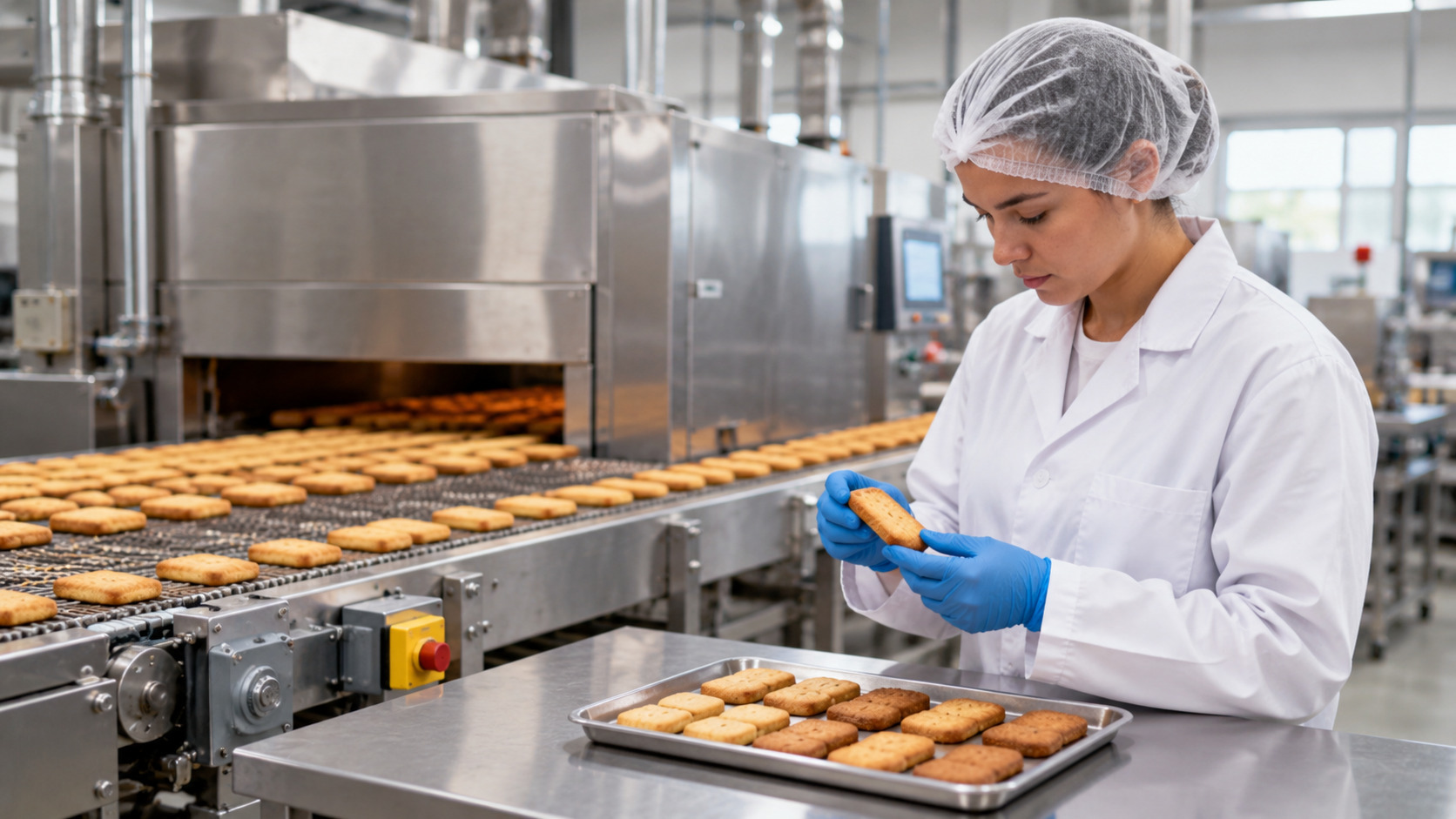
Commercial ovens can make these differences particularly important. Research into tunnel-oven monitoring notes that temperature variation within an oven can affect product uniformity and contribute to differences in colour, texture and moisture.
The location of the colour problem can therefore help narrow the investigation. Products that are consistently darker on one side of a belt, in one oven zone or at a particular point during a production run may indicate a process problem rather than a change in the leavening system.
Before reducing sodium bicarbonate to correct colour, production teams should check whether oven temperatures, belt speed, airflow or product loading have changed.

What to Check Before Changing the Formulation
The most useful troubleshooting approach is to compare an affected batch with a known acceptable one. Instead of starting by changing ingredients, establish what changed immediately before the problem appeared.
| Problem observed | What to investigate first |
| Low or uneven rise | Sodium bicarbonate and acid additions, mixing conditions, holding time, deposit weight or product dimensions |
| Coarse or irregular crumb | Mixing and aeration, batter or dough condition, leavening balance |
| Excessive browning | Product pH, bicarbonate-acid balance, oven temperature and baking time |
| Uneven colour across the line | Oven zones, airflow, belt speed, loading and product dimensions |
| Alkaline or soapy flavour | Residual bicarbonate, available acidity and product pH |
| Unexpected spread or texture | Complete formulation and process conditions rather than bicarbonate alone |
The table is a starting point rather than a diagnosis. Several factors may contribute to the same visible defect.
For example, a darker biscuit could result from a higher pH, but it could also have spent longer in a hotter oven. Poor cake height may result from the leavening system, but changes in mixing or depositing can produce a similar result.
Compare Like With Like
Batch records can help identify where the investigation should begin. Check the actual quantities of sodium bicarbonate and acidic ingredients rather than relying only on the formulation sheet. Any recent ingredient or supplier changes should also be noted.
Where pH is measured, affected and acceptable batches should be sampled at the same production stage using the same method. A change in pH is more meaningful when it can be compared with the bakery's own established product history.
Production records complete the picture. Mixing time, batch size, holding time, product weight and actual oven conditions can reveal whether the formulation remained constant while the process changed.
Once the most likely cause has been identified, controlled trials can test it. Wherever practical, change one important variable at a time. Altering sodium bicarbonate, acid level and baking conditions together may produce a better product, but it will not show which change solved the problem.
Evaluating Sodium Bicarbonate for Commercial Baking
If the investigation shows that sodium bicarbonate needs to be reviewed, manufacturers should consider the ingredient in relation to their particular bakery product rather than treating it only as a source of rise.
Masda Chemical supplies Sodium Bicarbonate for applications including baking. Its stated functions include chemical leavening and pH regulation.
For R&D and quality teams, the relevant question is whether the sodium bicarbonate works appropriately with the acidity and processing conditions of the formulation. Procurement teams should also ensure that the material supplied continues to meet the manufacturer's agreed ingredient requirements.
Trials can then assess the quality measures that matter for the particular product. These may include height or volume, crumb structure, colour, spread, texture, flavour and pH.
These measures should be considered together. An adjustment that improves rise but pushes the product outside its target colour is not a complete solution. Neither is an adjustment that deepens colour while creating excessive spread or an alkaline flavour.
The aim is consistent overall product performance, not the maximum effect from the sodium bicarbonate itself.
Managing Rise and Browning More Consistently
Sodium bicarbonate can influence both rise and browning in commercial bakery products, which is why it deserves attention when either becomes inconsistent. Its effect, however, depends on the acids and other ingredients in the formulation as well as what happens during mixing and baking.
Manufacturers can narrow the cause more effectively by comparing affected and acceptable production runs before making a formulation change. pH, ingredient records, mixing conditions, product dimensions and oven performance can help show whether sodium bicarbonate is contributing to the problem or whether another part of the process has changed.
When an adjustment is necessary, controlled trials should evaluate the complete product rather than rise or colour alone. This makes it easier to correct the original problem without introducing another quality issue elsewhere in the formulation.