Choosing soda ash by chemical specification alone does not always prevent handling or processing problems. A new supply may meet the required purity specification but behave differently during storage, transfer or feeding.
Soda Ash Dense and Soda Ash Light are both forms of sodium carbonate (Na₂CO₃), but they are different physical grades. The Australian Drinking Water Guidelines illustrate this distinction with indicative bulk densities of about 1,000 kg/m³ for dense soda ash and 500 kg/m³ for light soda ash. These figures are not universal purchasing specifications, but they show why the same chemistry can require different storage volumes and handling considerations.
For production, technical and procurement teams, the practical question is therefore not simply whether soda ash is required. It is whether the selected grade suits the way the material will be stored, transferred, dosed and used. Following the material through those stages makes the decision easier to understand.
Key Takeaways
- Dense and Light soda ash provide the same sodium carbonate chemistry, but differences in bulk density and other physical characteristics can affect storage, handling and feeding.
- Grade selection should follow the material through storage, transfer, feeding and the point of use. A grade that suits one process may create avoidable problems in another.
- A grade or supplier change should be treated as a material change. Compare the new specification with the requirements of the existing equipment and process before routine use.
Why Grade Matters Before Soda Ash Reaches the Process
Soda ash is the trade name for sodium carbonate and is used in industrial applications including glass, chemicals and detergents, as reflected in U.S. Geological Survey soda ash data. Its chemical identity, however, does not tell a manufacturer how much storage space a tonne will require, how reliably the dry material will discharge from storage or whether an existing volumetric feeder setting will still deliver the intended amount.
Bulk density is the clearest distinction between Dense and Light grades. A higher-bulk-density material places more weight into the same storage volume. Particle-size distribution, fines, moisture and previous handling can also affect discharge, dusting and feeding, so these characteristics should be checked on the actual supplier specification rather than assumed from the grade name.
These differences become practical as soon as the material arrives on site. Soda ash must fit into the available storage, move through transfer equipment and reach the process at a controlled rate before its chemical function becomes relevant.
| Decision point | Soda Ash Dense | Soda Ash Light | What to verify |
| Chemical identity | Sodium carbonate (Na₂CO₃) | Sodium carbonate (Na₂CO₃) | Required purity, impurities and end-use limits |
| Bulk density | Higher | Lower | Actual supplier range and storage/feeding assumptions |
| Storage volume for the same weight | Generally lower | Generally higher | Bulk storage, day-bin and warehouse capacity |
| Particle characteristics | Product-specific | Product-specific | Sieve or particle-size distribution where relevant |
| Dusting and flow | Do not infer from grade name alone | Do not infer from grade name alone | Fines, humidity, transfer method and equipment design |
| Dissolution | Check under actual process conditions | Check under actual process conditions | Water conditions, agitation, concentration and required preparation time |
Follow the Material Through the Plant
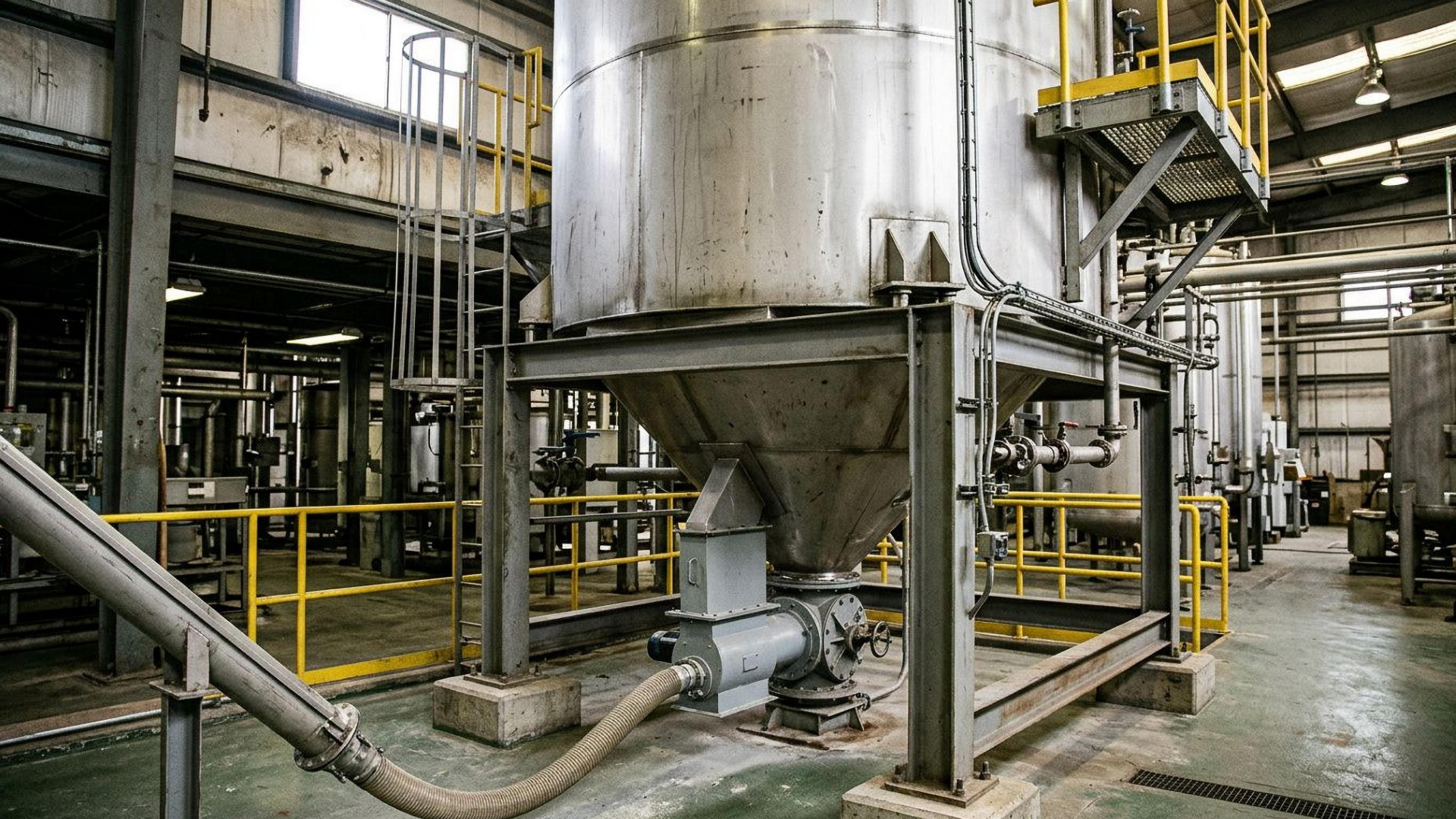
A grade choice becomes easier to assess when each dry-handling stage is considered in sequence. A change that looks minor on a purchase order can become obvious once the material enters equipment that was set up around the previous supply.
Storage capacity depends on bulk density
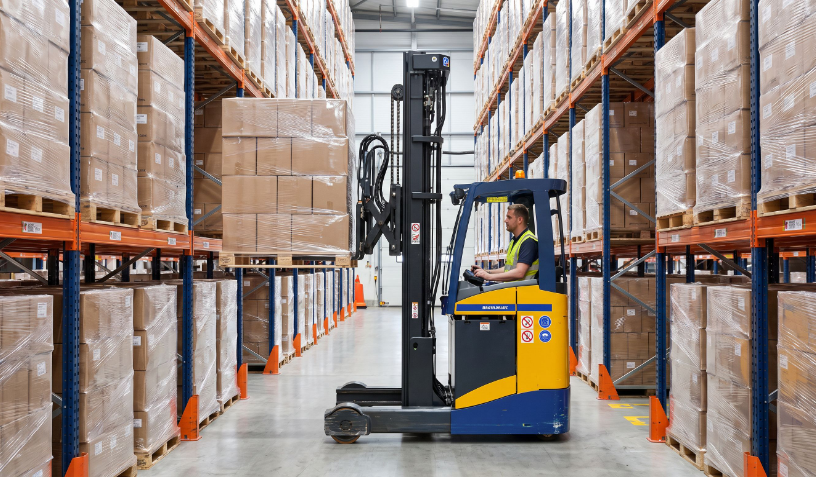
Procurement buys soda ash by weight, but storage equipment has a fixed volume. If the new material has a lower bulk density, the same tonnage will need more space. This can matter when a plant operates close to the capacity of a bulk storage vessel, day bin or warehouse area, or plans inventory around a fixed number of deliveries.
Storage conditions can also affect what happens next. Bulk-solids research shows that humidity and liquid content can change how particles interact, so poor discharge after storage should not automatically be blamed on the Dense or Light grade label. The material and the storage environment need to be considered together.
Transfer conditions can amplify dust problems
Once soda ash leaves storage, dust may become the most visible concern. Bag emptying, free-fall transfer, conveying and filling all disturb dry particulate material, and research on industrial dustiness shows that dust release depends on both particle characteristics and the intensity of handling.
A dusty transfer point therefore does not prove that Light soda ash is unsuitable or that Dense soda ash will solve the problem. Fines, drop height, conveying method, enclosure and extraction all influence what operators see. If dust increases after a material change, compare the new physical specification with the previous one while reviewing the transfer conditions at the same time.
Feeding is where bulk-density changes become measurable
With volumetric feeding, a change in bulk density can change how much material is delivered at the same equipment setting. This is why feeder calibration should be checked when switching to a soda ash grade with a different bulk-density range.
For a soda ash change, the practical response is simple: do not assume that the existing setting still represents the same kilograms per hour. Check the incoming bulk-density range and reconfirm the feeder under plant conditions. Gravimetric systems measure weight directly, but they still depend on reliable discharge from the hopper.
Once Soda Ash Enters the Process, the Selection Question Changes
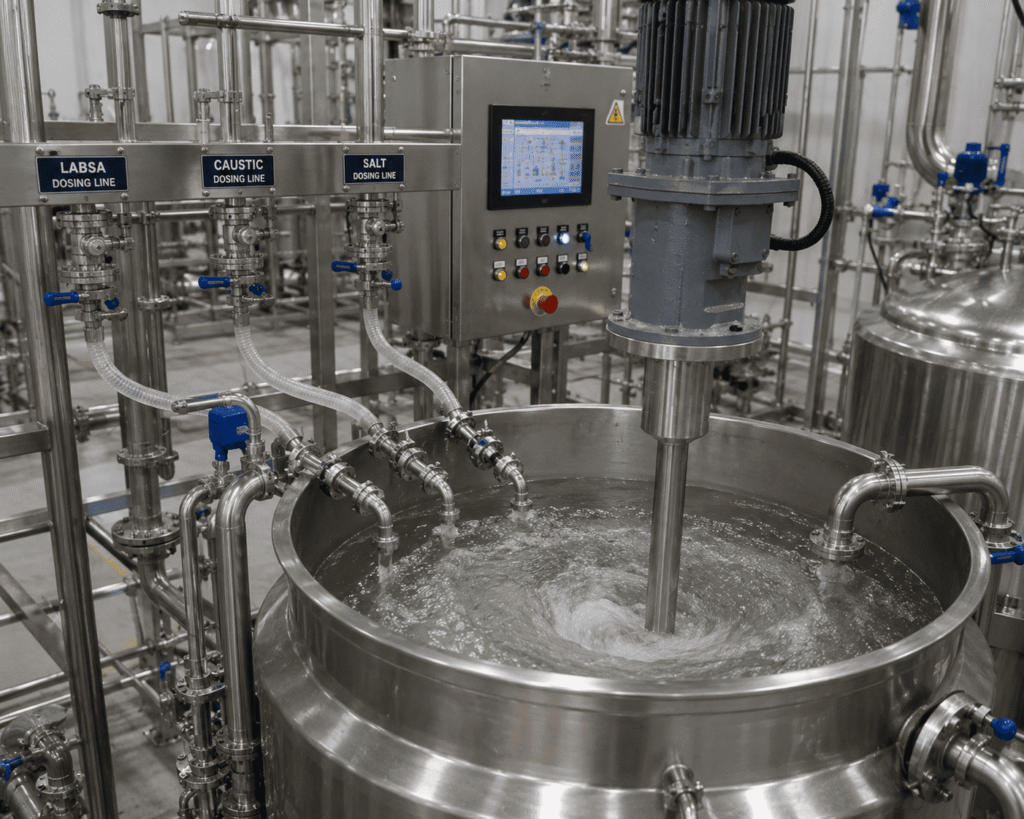
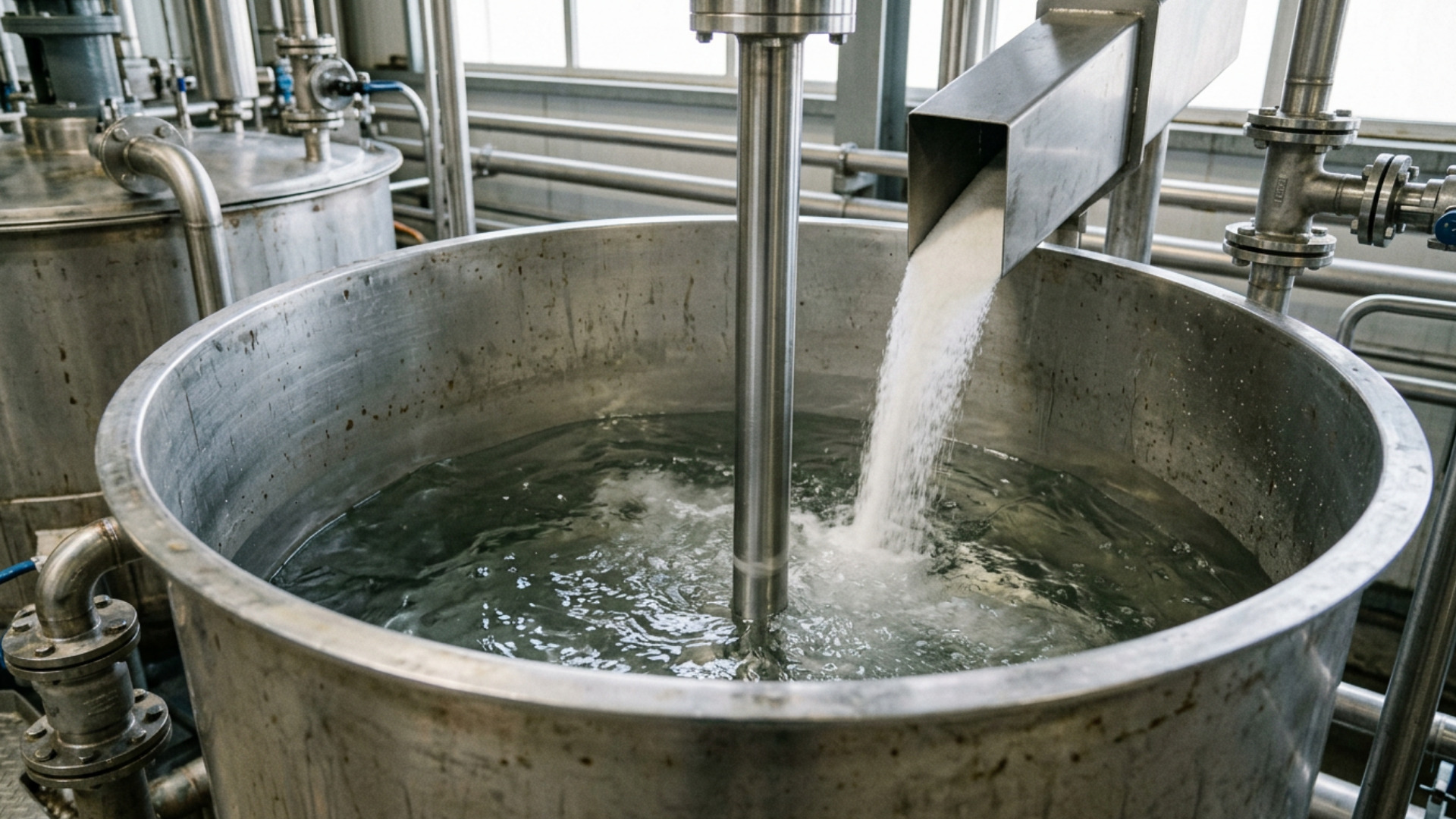
After storage and feeding have been addressed, the selection question moves closer to the manufacturing step. Some plants add soda ash to a dry batch; others dissolve it before use. The properties that mattered most during storage and feeding may therefore become less important than the way the material behaves at the point of use.
Dissolution is a good example. Sodium carbonate dissolution research shows that conditions such as temperature and pH can affect how quickly the material dissolves. For a production plant, the important question is not whether one grade is universally faster. It is whether the soda ash dissolves sufficiently within the available preparation time.
Water temperature, concentration, agitation, addition rate and particle characteristics may all contribute. If solution preparation becomes slower after a grade or supplier change, check the new material and the preparation conditions together rather than compensating immediately with longer mixing.
Why the Application Changes the Decision
Different industries can use the same sodium carbonate chemistry but place different demands on the physical grade. Application lists are therefore a useful starting point, but the manufacturing route determines which characteristics matter most.
Glass manufacturing
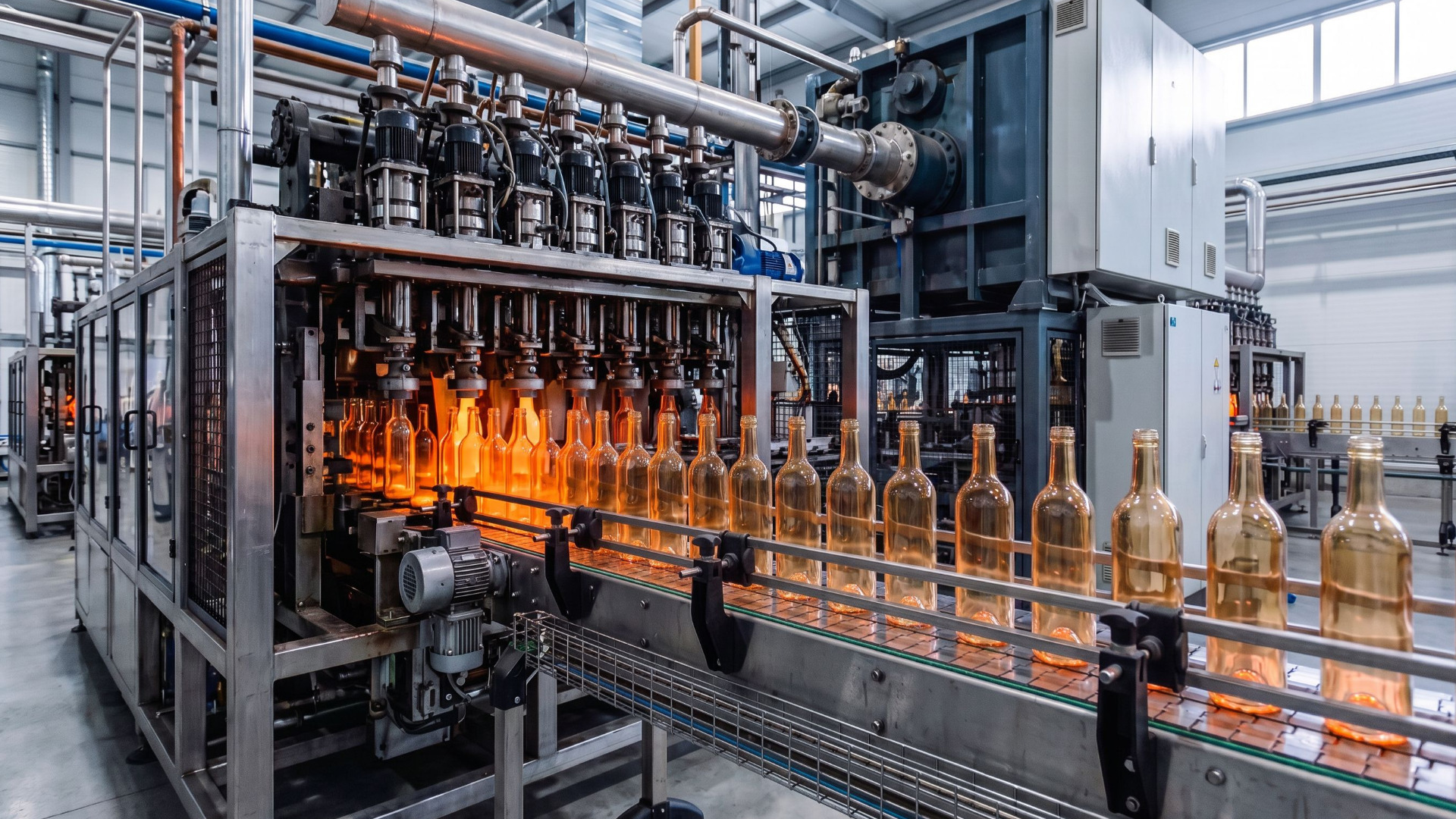
In glass manufacturing, soda ash forms part of a multicomponent batch rather than simply being dissolved and dosed as an alkaline solution. Glass-batch research shows that particle size can influence reaction behaviour during fusion, so physical characteristics need to be considered alongside chemical purity.
An established glass process should therefore work from its approved raw-material and batch requirements. A substitute grade needs to fit both the handling system and the process that follows.
Detergent manufacturing
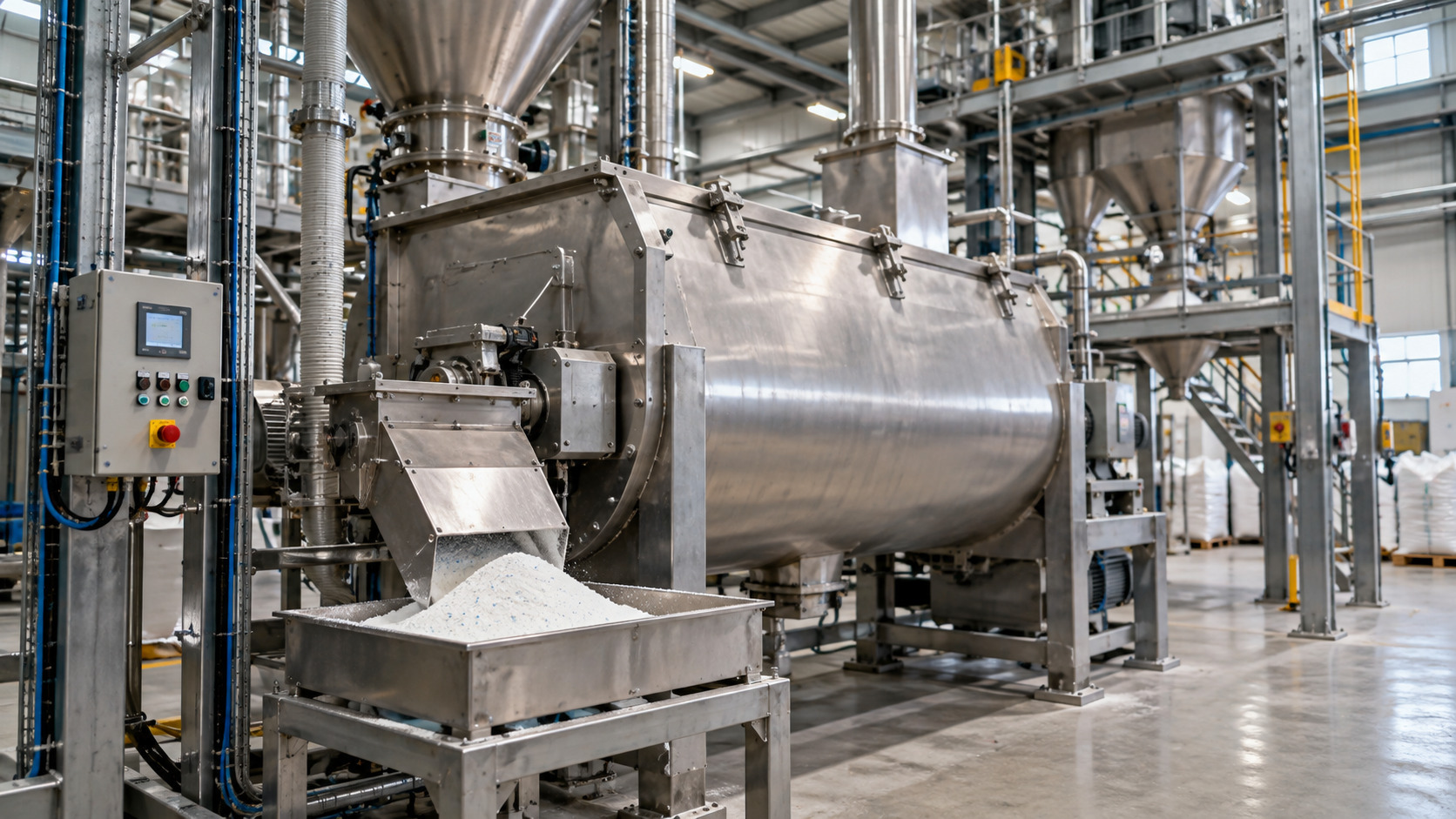
Detergent production can create a different set of priorities. A dry-blended product may make dust, material flow and segregation particularly important, while a liquid process that first prepares a soda ash solution may place more emphasis on dosing and solution make-up.
Soda ash may also form part of a wider alkaline system. Masda Chemical's article on LABSA neutralisation in detergent manufacturing shows why alkali choice, addition and mixing conditions need to be considered together. The same principle applies here: procurement needs to understand the manufacturing route, not just the application name.
Water treatment and chemical processing
Where soda ash is fed dry, storage and feeder behaviour may dominate the selection discussion. Where a solution is prepared first, dissolution time and solution-make-up capacity become more important. In both cases, the dosing route tells the plant which physical characteristics deserve closer attention.
If Problems Start After a Grade Change, Trace What Changed
When a process has been stable and a handling problem appears after a grade or supplier change, the symptom can help narrow the investigation. The aim is not to assume that the new material is wrong, but to identify which storage, handling or process assumption may no longer be true.
| Plant symptom | What to investigate first | How grade selection enters the review |
| Storage vessel or day bin fills sooner than expected | Incoming bulk density, delivery weight and usable storage volume | Compare the new bulk-density range with the previous approved material |
| More dust at charging or transfer | Fines, particle distribution, drop height, conveying and extraction | Check the new material, but review handling conditions at the same time |
| Bridging or inconsistent discharge | Humidity, storage time, consolidation and hopper conditions | Compare physical specifications and confirm whether the problem follows the material |
| Feed rate changes at the same setting | Bulk density and feeder calibration | Reconfirm the volumetric feed rate in kilograms per hour |
| Solution preparation takes longer | Temperature, concentration, agitation, addition rate and material characteristics | Test the proposed grade in the actual solution-preparation step |

Turn Process Requirements Into a Purchasing Specification
By this stage, the purchasing decision should be clearer. Production knows how the material is stored and dosed, technical teams know which characteristics can affect the application, and procurement can turn those requirements into a specification rather than buying on grade name and price alone.
Depending on the process, that specification may cover sodium carbonate purity, bulk-density range, particle-size or sieve distribution, moisture or loss-on-drying limits, insoluble material, application-specific impurities, packaging, lot traceability and certificate-of-analysis requirements. Not every plant needs every parameter, but the limits that matter should be explicit.
Once those requirements are defined, they can be compared with the available product information. For example, Masda Chemical's Soda Ash Light specification lists a minimum purity of 99.2% and a bulk density of 0.5-0.7 g/cm³, while Soda Ash Dense is identified as the higher-bulk-density grade. These values are a starting point; the plant still needs to confirm that the selected product fits its equipment, process and end-use requirements.
If a proposed grade differs materially from the approved supply, a controlled plant trial can be more useful than relying on the grade label. Focus the trial on the stages most likely to change - storage and discharge, transfer and dust, feeding accuracy, solution preparation or batch behaviour - and use the same acceptance criteria applied to routine production.
Choosing the Grade Around the Process
Choosing between Soda Ash Dense and Soda Ash Light is not a question of one grade being better than the other. The useful distinction is whether the physical grade fits the way a particular plant stores, handles and uses the material.
Bulk density can change storage requirements and volumetric feeding. Dust and flow depend on the material together with the way it is stored and transferred. Once soda ash reaches the manufacturing step, the application and dosing route determine which other characteristics matter most.
A strong selection process therefore starts with the operating requirement rather than the grade name: identify where the constraint occurs, determine which material property influences it and compare the proposed specification against that requirement. This keeps soda ash selection tied to process reliability rather than treating it as a last-minute purchasing substitution.