Shelf-life instability remains one of the most persistent challenges in food manufacturing. Products can spoil faster than expected, microbial contamination risks can emerge during storage, and formulation inconsistencies may affect acidity, texture, or flavour.
Acidulants play a central role in addressing these challenges. They are not simply sources of acidity; they are functional tools that support microbial management, pH control, product quality consistency, and processing reliability.
Among the most widely used acidulants in the industry are acetic acid and citric acid. Both are essential in food production, yet they serve different purposes and perform differently under real manufacturing conditions. The right choice depends on product category, preservation strategy, and desired sensory outcomes.
Why Acidulants Matter in Food Manufacturing
Acidulants contribute to multiple aspects of food manufacturing performance. Their primary functions include:
- Microbial stability: Inhibiting bacteria, yeast, and mould growth through acidity and, in some cases, specific antimicrobial mechanisms.
- pH control: Stabilising formulation acidity to ensure consistent taste, texture, and chemical behaviour.
- Shelf-life management: Lowering pH and creating conditions where spoilage organisms and pathogens struggle to survive.
- Product consistency: Maintaining uniform quality across batches and throughout storage.
- Production reliability: Supporting efficient processing by reducing the risk of microbial failures, off-flavour development, or quality drift.
Food manufacturers rarely choose an acidulant for taste alone. The final decision also affects microbial stability, colour retention, flavour balance, and how well the product survives storage and distribution. In practice, the wrong acid can leave a product too sharp, too flat, or less stable than expected.
That is why acetic acid versus citric acid should be treated as a formulation question, not a simple ingredient preference. The best answer depends on the food matrix, the target pH, the sensory profile, and the shelf-life challenge you want to address.
The topic matters even more now because food companies face pressure to reduce waste, extend ambient and chilled shelf life, and keep labels simple. Organic acids remain attractive because they can support preservation without moving far away from familiar pantry-style ingredients. For food scientists, the challenge is to choose the acid that fits the product rather than forcing one ingredient into every application.
Flavour Profile
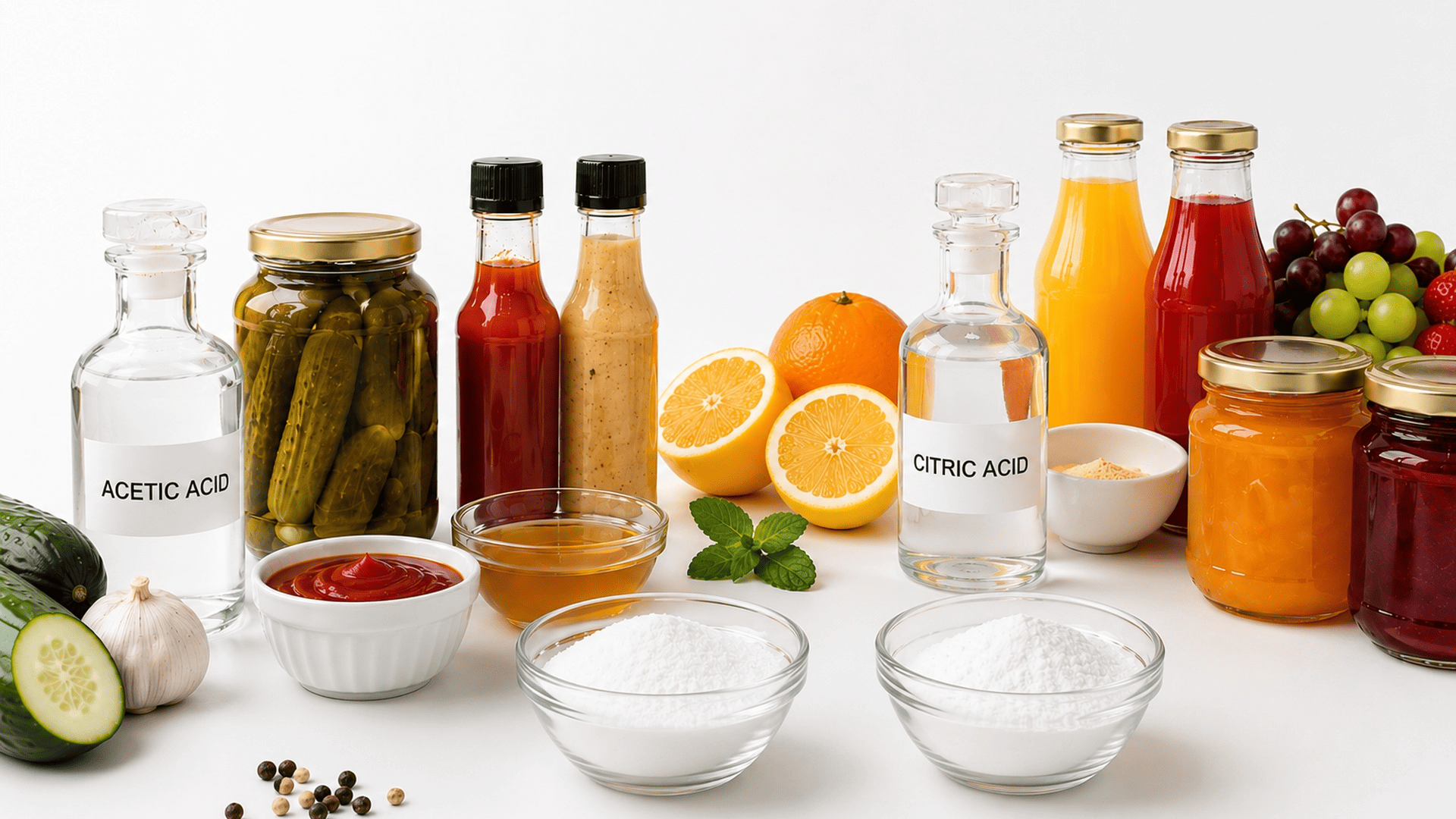
Acetic acid gives a distinct vinegar note. It brings an immediate, assertive sourness that consumers recognise in pickles, dressings, relishes, marinades, and some sauces. That sharpness can be useful when the product needs a bold acid edge rather than a rounded tart taste.
Citric acid, on the other hand, tastes cleaner and brighter. It works especially well in beverages, jams, fruit fillings, confectionery, and sweet-and-sour products where the acidity should lift the flavour without introducing a vinegar character. It also helps mask flatness in sweet systems by adding a crisp acidic finish.
For food developers, the difference matters because flavour perception shapes buying behaviour as much as safety or shelf life. A product that performs well technically can still fail if the acid note feels too aggressive or too dull for the category. That is one reason citric acid appears so often in fruit-based and beverage systems: it supports acidity without dragging the flavour profile into savoury territory.
Functional Behaviour
Citric acid does more than lower pH. It also chelates metal ions, which helps slow oxidation and protect colour and flavour in sensitive systems. That matters in fruit preparations, beverages, and fat-containing products where trace metals can accelerate quality loss. This same chelating behaviour helps explain why citric acid appears in many formulations that need both acidity and stability.
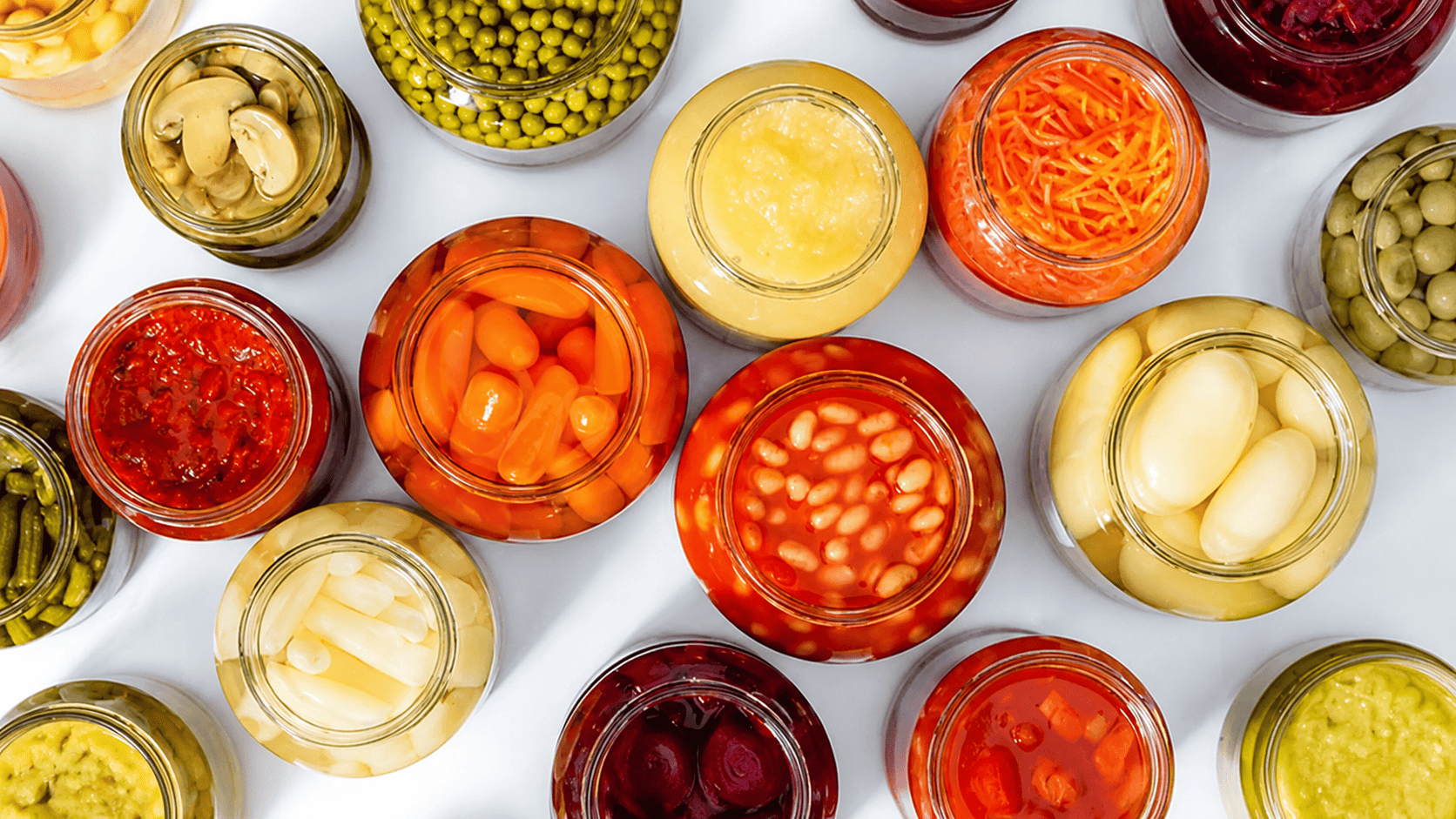
Acetic acid does not have the same chelation profile, but it delivers strong antimicrobial support in systems where a vinegar-style flavour fits the product. It often performs well in products designed for ambient storage, such as pickled vegetables, sauces, and chilled ready-to-eat items. Reviews of vinegar and acetic acid in food technology consistently describe acetic acid as both a flavouring agent and a preservative with long-standing use in food systems.
This functional split explains why one acid can outperform the other in one product and underperform in another. Citric acid usually serves as a cleaner pH adjuster and chelator, while acetic acid usually acts as a more assertive preservative-flavour hybrid. In industrial terms, that means formulation teams should define the product role first, then choose the acid.
Preservation Effects
Recent research shows that both acids can help suppress spoilage and pathogen growth. In a 2024 study on salmon fillets, acetic and citric acids reduced the metabolic activity of spoilage-related Rahnella aquatilis and helped extend the shelf life of the product. The study also showed that both acids reduced spoilage-related gene activity, which suggests a deeper effect than simple surface acidification.
Another study on tabbouleh salad found that acetic acid inhibited Salmonella Typhimurium and E. coli O157:H7 more effectively than citric acid at 21 °C. The researchers also found that combining the two acids produced a synergistic effect against certain pathogens . That findings support a practical point: acetic acid can be the more effective antimicrobial choice for some chilled and ready-to-eat foods.
A broader 2024 review of organic acids also highlighted their growing role in controlling food-borne pathogens particularly in acidic and acidified foods. The review attributed their effectiveness to their ability to weaken microbial cell membranes and disrupt internal pH balance. These findings matter because shelf life depends on more than pH alone. Even when a product appears acceptable, microorganisms can still damage texture flavour, and product quality. Choosing the right acidulant must control the specific microorganisms that post the greatest risk in a particular food system. An effective acidulant can also reduce the need for harsher preservation methods. This is particularly valuable for manufacturers looking to achieve longer shelf life while maintaining familiar ingredient lists and a more food-based approach to preservation.How Citric Acid Helps Stability
Citric acid deserves special attention because its role in food processing extends well beyond adding sourness. When combined with citrate, it provides good buffering capacity, helping maintain a stable pH in products that need to remain consistent throughout their shelf life. It also has strong metal-ion chelation properties, allowing it to bind metals that can accelerate oxidation and reduce product quality.
In food manufacturing, these properties help preserve colour, metallic off-notes, and oxidative deterioration. This is particularly valuable in products such as fruit juices, canned foods, sauces, and processed fruit, where appearance and freshness matter as much as flavour. The ability to bind trace metals further gives citric acid an advantage in formulations that need more than simple acidification.
Research also highlights the versatility of citric acid across the food industry. A review on citric acid describes its widespread use in stabilising concentrates and preserving the texture and colour of processed fruit products. These functional properties have made citric acid one of the most useful organic acids in modern food manufacturing.

How Acetic Acid Helps Processing
Acetic acid has a different functional profile. It is widely recognised as the primary flavouring and antimicrobial component in vinegar, making it valuable as both a food ingredient and a processing aid. Depending on the application, it can function as an acidulant, preservative, and flavouring ingredient in products, particularly where a pungent sour note complements the product’s recipe. This makes acetic acid well suited to pickles, fermented vegetables, sauces, and certain cheese products. In these products, the characteristic sourness is not a side effect; it is part of the product’s identity. Because the sourness is already an expected flavour, acetic acid provides both the sensory appeal and functional performance. Acetic acid can also contribute to food safety when used as part of a broader preservation strategy. A recent review of organic acids found that they inhibit microbial growth by permeating microbial membranes and disrupting the internal pH balance of microorganisms. This antimicrobial action allows acetic acid to do more than enhance flavour - it also helps extend shelf life and preserve product quality.Acetic Acid vs Citric Acid: Key Considerations for Food Manufacturers
Although both ingredients serve as acidulants, their functional roles differ depending on product requirements. The comparison below focuses on aspects that directly impact food preservation and formulation stability.
| Aspect | Acetic Acid | Citric Acid |
|---|---|---|
| Microbial Control | Stronger antimicrobial activity; widely used in preservation-focused applications | Contributes via pH reduction; often used for flavour and stability support |
| Preservation Performance | Greater preservation benefits for microbial stability | Supports shelf life through oxidation control and formulation stability |
| Shelf-life Impact | Extends shelf life by inhibiting microbial growth | Extends shelf life by reducing oxidation and stabilising formulations |
| pH Regulation | Effective pH reducer with strong acidity | Mild acidity with flexible pH adjustment |
| Oxidation Stability | Limited chelating properties; not primarily used for oxidation control | Strong chelating properties; protects against oxidation and colour degradation |
| Flavour Influence | Distinctive vinegar-like acidity; suits savoury and preserved foods | Clean, refreshing sourness; suits beverages, confectionery, and fruit products |
| Formulation Considerations | Selected for antimicrobial contribution | Selected for flavour balance, stability, and oxidation management |
Use acetic acid when the product needs:
- A sharp vinegar character.
- Strong fit with pickled, fermented, or savoury formats.
- Good antimicrobial support in chilled or ambient-ready foods.
- A flavour profile that can tolerate a more pungent note.
Use citric acid when the product needs:
- A cleaner, fruitier tartness.
- Metal-ion chelation to help reduce oxidation and colour loss.
- Better fit with beverages, fruit products, sauces, and confectionery.
- pH control without introducing a vinegar taste.
Government and Regulatory Context
In Singapore, food manufacturers operate within a robust food safety framework regulated by the Singapore Food Agency (SFA). The agency oversees food safety standards and encourages best practices that support safe processing, stable formulations, and reliable shelf life throughout the food supply chain.
For processors working with acetic acid and citric acid, this means the choice of ingredient should support both product performance and compliance expectations. The SFA's guidance highlights the importance of:
- Controlled pH levels
- Effective microbial management
- Product stability
- Food safety throughout processing and storage
In practical terms, the SFA’s focus on controlled pH, microbial management, product stability, and safe storage makes acidulants especially relevant in modern food manufacturing. Acetic acid and citric acid support these goals by helping processors maintain the right acidity, limit spoilage risks, and preserve product quality from production through distribution.
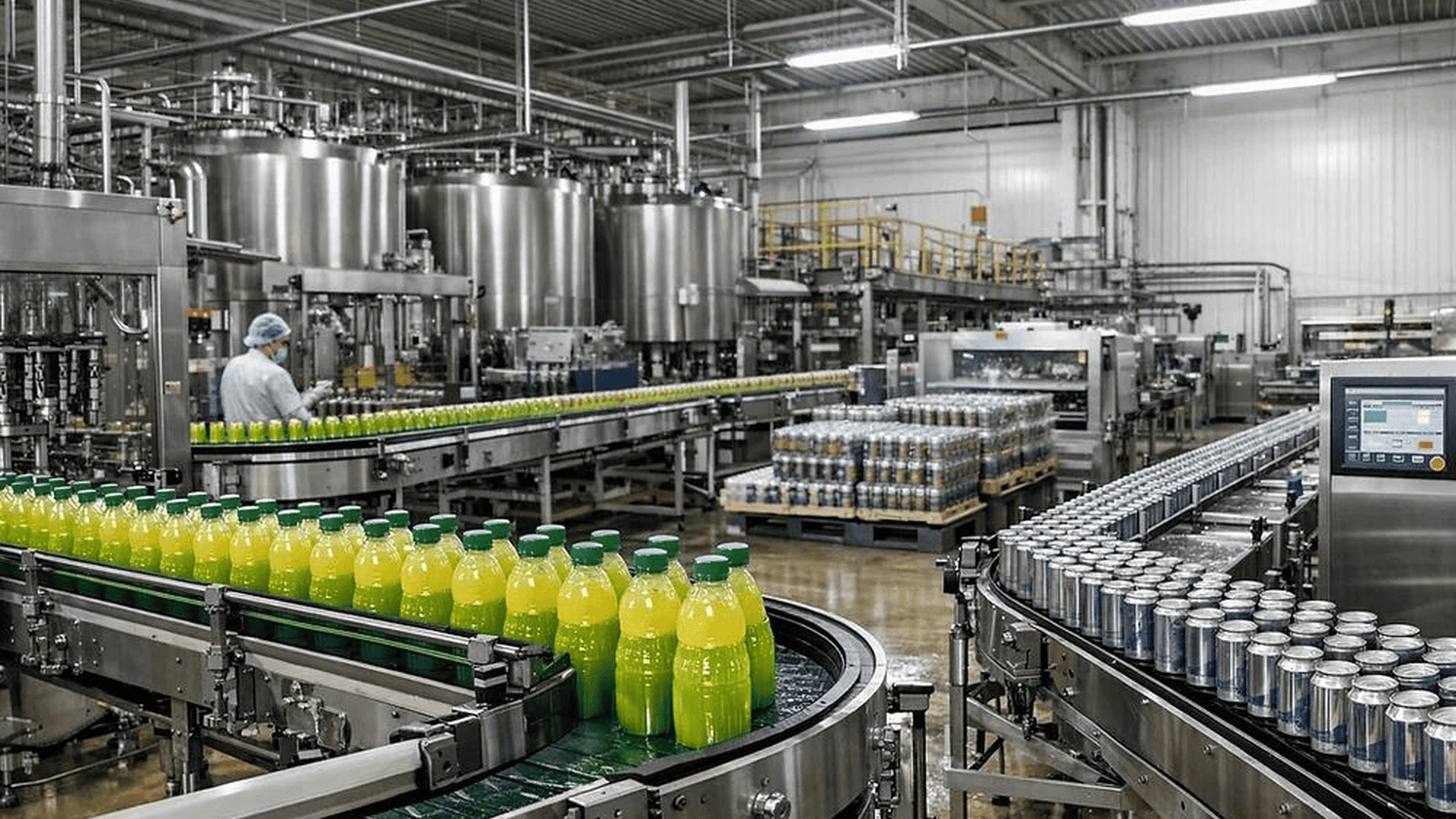
This is particularly important for food producers making sauces, dressings, pickled vegetables, seafood products, fruit preparations, and chilled ready-to-eat items. These categories often depend on acidification to maintain flavour, limit microbial growth, and extend shelf life without compromising consumer appeal. In such applications, the acidulant must do more than create sourness; it must also work as part of a wider food safety strategy that suits factory operations and regulatory requirements.
What This Means For Suppliers
For food ingredient suppliers, the value lies not only in providing a range of acids but also in helping manufacturers select the right ingredient for their specific application requirements.
Masda Chemical's Acetic Acid and Citric Acid are both widely used in food processing, but their effectiveness depends largely on the application. Acetic acid is often chosen for its distinctive vinegar-like acidity, making it well-suited for pickled products, savoury foods, and preservation-led foods. Citric acid, on the other hand, is valued for its clean tartness, pH control capabilities, and ability to support flavour balance, buffering, and product stability.
For food manufacturers, ingredient performance depends on more than functionality alone. Consistent quality, clear technical specifications, and reliable supply all contribute to successful product development and production. Access to well-documented food-grade ingredients enables technical teams to make informed formulation decisions while reducing the risk of variability during processing.
In practice, this helps manufacturers maintain greater control over critical factors such as pH, shelf life, sensory attributes, and overall product consistency. These considerations are particularly important in applications where product quality and stability must be maintained across multiple production batches.