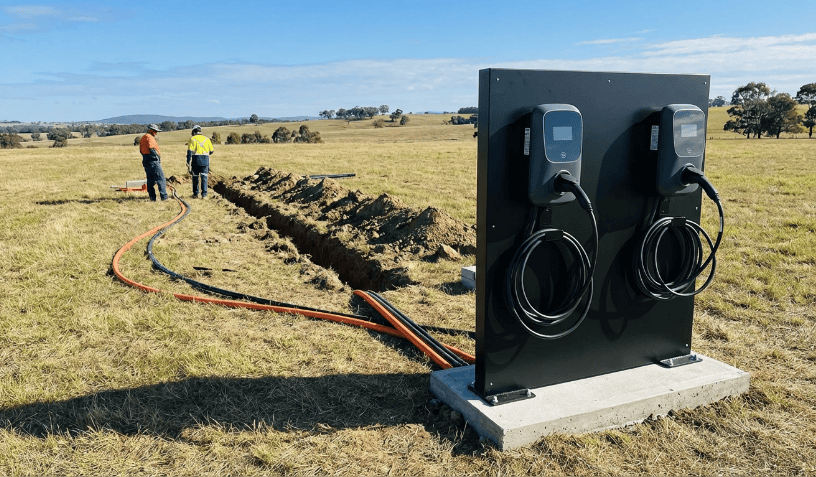
Driving the Green Transition, Food Security, and Industrial Performance in 2026
Sulphuric acid retains its title as “king” of industrial chemicals in 2026. It's produced in larger quantities than almost any other substance on Earth, and its importance continues to grow.
As manufacturers pivot toward cleaner energy and more efficient food production, global sulphuric acid demand is expected to reach 280 million tonnes in 2026. This growth is driven by fertiliser production and the rapidly expanding battery supply chains for electric vehicles (EVs).
Why Sulphuric Acid Matters More Than Ever
Two major trends are making sulphuric acid especially strategic for manufacturing plants today: green transition and food security.
On the green energy front, sulphuric acid is essential for extracting lithium, cobalt, and nickel from ores and spent batteries. These materials feed the cathode and precursor plants that power EV production. Meanwhile, the fertiliser sector remains the single largest consumer worldwide, accounting for roughly 60% of global output, with phosphate fertilisers accounting for the bulk of that output to sustain crop yields.
Market analysts project total sulphuric acid volume will climb from 280 million tonnes in 2026 to nearly 384 million tonnes by 2035. This reflects both traditional uses in fertilisers and metals, as well as newer demand from batteries and advanced materials.
For plant managers, sulphuric acid isn't just a basic utility chemical. It's a barometer of broader commodity cycles—fertiliser demand, mining expansions, refinery margins, and battery metals —all of which influence availability and pricing.
This dual pressure of feeding the world and electrifying transport creates real operational challenges. Price volatility, supply chain resilience, sustainability compliance, and purity requirements are no longer abstract concerns—they're daily realities.
This article explores the core industrial applications of sulphuric acid, how to select the right grade, and what plant managers must consider in 2026 from safety, logistics, and Environmental, Social, and Governance (ESG) perspectives.
Key Industrial Uses of Sulphuric Acid
Rather than viewing sulphuric acid simply as a commodity, think about it in terms of outcomes. What specific result does your plant require?
1. Metal Processing and Surface Treatment
Outcome: Clean, reactive surfaces ready for coating or forming
Steel Pickling
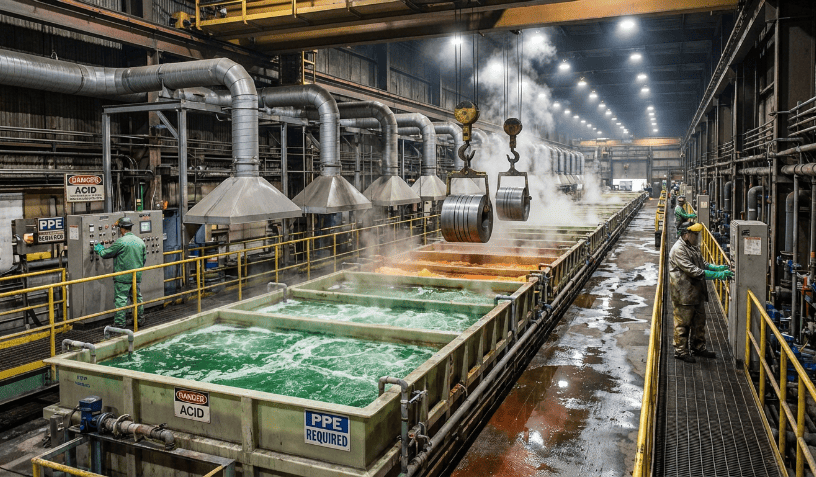
In steel pickling, sulphuric acid removes mill scale, oxides, and rust from steel surfaces before rolling, galvanising, painting, or plating. Concentrations around 5-10% by weight are commonly used, often heated to approximately 60°C.
This process dissolves iron oxides such as Fe2O3 and Fe3O4, leaving a clean, reactive surface for coatings. This step is critical for automotive, construction, and appliance manufacturers that depend on consistent adhesion and long-term corrosion resistance.
Industry research such as Homjabok, W. et al. (2010). "Pickling Behavior of AISI 304 Stainless Steel in Sulfuric and Hydrochloric Acid Solutions." Journal of Metals, Materials and Minerals, has also documented the efficiency of sulphuric acid in large-scale pickling operations, particularly in cost-sensitive environments compared with hydrochloric acid under certain process conditions.
Anodising & Aluminium Treatment
In aluminium processing, sulphuric acid solutions play a key role in anodising to create controlled oxide layers or micro-textures that improve paint bonding, wear resistance, and appearance. For OEMs and metal fabricators, reliable acid supply and tight control of pickling bath composition translate directly into fewer rejects and more predictable downstream performance.
This matters in aerospace, transport, and architectural applications where quality standards are exacting.
For plant managers, the key benefit is consistency: predictable surface activation leads to lower rejection rates and stronger coating performance.
2. Fertiliser Production – The Bulk Driver
Outcome: Conversion of phosphate rock into plant-available nutrients
Globally, fertiliser manufacturing remains the dominant use of sulphuric acid. It's essential for producing phosphate fertilisers such as superphosphates and phosphoric acid-based products.
Industry sources consistently report that well over half of all sulphuric acid produced goes into fertiliser value chains. Many analyses cite figures around 60% when all phosphate-related uses are included.
For industrial buyers outside agriculture, this matters because fertiliser demand, crop cycles, and phosphate mining capacity heavily influence sulphuric acid availability and price. When fertiliser producers ramp up output ahead of planting seasons or expand capacity in key regions like China and India, local sulphuric acid markets can tighten.
This pushes up costs for metal processors, refineries, and battery plants that depend on the same feedstock.
3. Petroleum Refining and Alkylation
Outcome: High-octane fuel production
Refineries use concentrated sulphuric acid as a catalyst in alkylation units. These units combine light olefins like propylene and butylene with isobutane to produce high-octane alkylate—a key blending component for petrol.
Sulphuric acid alkylation has grown in importance as refiners upgrade their gasoline pools to meet tighter octane and emissions standards. This often serves as an alternative to hydrofluoric acid processes that carry higher acute toxicity risks.
Further, a typical refinery circulates large volumes of acid through its alkylation loop, gradually generating "spent" acid containing hydrocarbons and water. This must be regenerated or replaced because its strength, purity, and catalytic performance would decline over time.
Case studies from North American refineries show that installing spent acid regeneration (SAR) units—for example, MECS® SAR plants—allows operators such as Conoco, Chevron and Hess to recover high-strength sulphuric acid from streams containing about 90% acid, 2–5% water, and hydrocarbon impurities. This reduces both fresh acid consumption and waste liabilities.
4. The New Era: Batteries and Technology Manufacturing
Outcome: Critical mineral extraction and ultra-clean surfaces
Battery Minerals Leaching
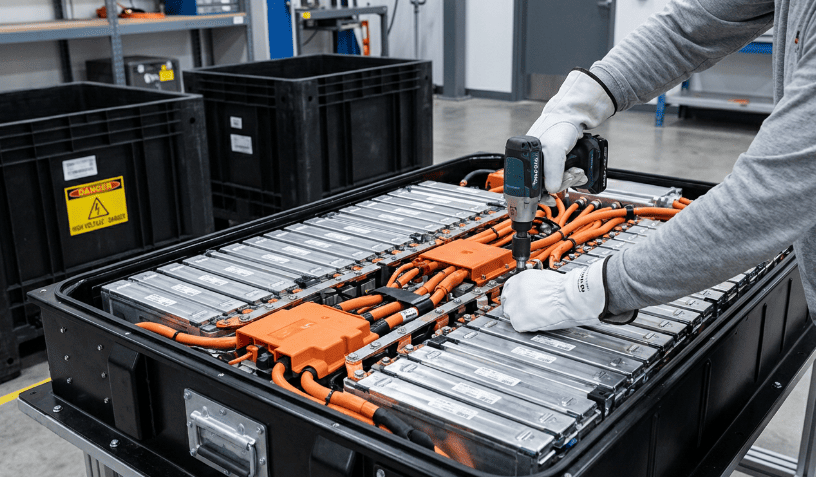
In the EV and electronics value chains, sulphuric acid is rapidly becoming a strategic reagent. In hydrometallurgical battery recycling, sulphuric acid leaching systems can recover 90% or more of cobalt and lithium from spent Li-ion batteries under optimised conditions.
An academic study has reported recovery levels of roughly 93% cobalt and 90% lithium from Li-ion cathode materials using mixed sulphuric/organic acid leach solutions at controlled temperatures. Such processes underpin closed-loop recycling projects and help reduce the primary mining footprint of EV metals.
Semiconductor & Electronics Manufacturing
In semiconductor and electronics manufacturing, high-purity electronic-grade sulphuric acid is used in wafer cleaning, surface preparation, and etching steps. Suppliers advertise metal impurity levels at or below 0.01 ppm and document performance exceeding 96% removal of organic contaminants from wafer surfaces. This is typically done in combination with oxidisers like hydrogen peroxide.
For fabrication plant managers, this purity is essential to minimise defects in advanced logic and memory nodes. Particulate or ionic contamination can devastate device yields.
Purity Grades and Selection Guide
Choosing the correct grade is fundamental for cost efficiency and performance. Chemical buyers increasingly search by grade and application, as the differences lie not just in concentration but also in trace metal limits and consistency.
A knowledgeable distributor should provide a full Certificate of Analysis (CoA) aligned with your process requirements.
The table below summarises typical grades relevant to manufacturing plants:
| Grade type | Typical concentration | Primary uses in plants | Notes for buyers |
|---|---|---|---|
| Commercial / Technical | 93–98% w/w | Steel pickling, metal cleaning, ore leaching, pH adjustment in wastewater | Cost-effective workhorse grade, suited to bulk processes where trace metals are not critical. |
| Battery Grade | Typically, 30–38% as filled in lead acid cells | Electrolyte for automotive and industrial lead acid batteries or Uninterruptible Power Supply (UPS) systems | Formulated for stability and consistent density; contamination can shorten battery life. |
| Reagent / American Chemical Society Grade | Often 95–98% | Laboratory syntheses, analytical chemistry, high control process development | Manufactured to ACS or equivalent standards; includes certificates of analysis for trace impurities. |
| Electronic / Semiconductor Grade | Commonly 96% | Wafer cleaning, microelectronics, Printed Circuit Boards (PCB) desmearing and etching | Ultra-low metal impurities (down to ppb), compliant with Semiconductor Equipment and Materials International (SEMI) or American Society for Testing and Materials (ASTM) electronics standards. |
Plant procurement teams often pair a bulk commercial grade (delivered in ISO tanks or road tankers) for general utilities and treatment duties with smaller, high-purity streams for electronics, lab, and quality control (QC) functions. Working with a distributor that can supply multiple grades from the same logistics platform simplifies inventory management and helps ensure consistent quality across sites.
Safety, Logistics and ESG in 2026
In today's regulatory environment, safe handling and environmental performance are as important as price and concentration.
Sulphuric acid is classified as a Class 8 corrosive substance under United Nations (UN) transport regulations. It's typically shipped under UN 1830 for concentrations above 51% or UN 2796 depending on concentration and formulation.
Dedicated ISO tank containers for UN 1830 cargoes are usually constructed from carbon steel with internal linings of polyethylene (e.g. LLDPE) or polytetrafluoroethylene (PTFE) to resist long-term corrosion at concentrations of 93–98%.
Storage & Handling
For fixed storage, carbon-steel tanks with suitable linings or high-density polyethylene vessels are standard for commercial and technical grades. The design must comply with appropriate codes and corrosion allowances.
From a worker‑safety standpoint, many plants apply the Hierarchy of Controls:
- Substituting less hazardous reagents where possible
- Implement engineering controls such as enclosed transfer lines and scrubbers
- Ensuring clear labelling and Safety Data Sheet (SDS) access
- Layering administrative controls and PPE—face shields, acid-resistant gloves, aprons—for routine handling
- Integrating leak containment systems and emergency shower/eyewash stations near unloading points
These measures are basic expectations for compliance audits.
Circular Economy and Spent Acid Regeneration (SAR)
Circularity is a growing theme in procurement specifications, particularly for refineries and chemical complexes. Spent acid regeneration allows plants to reduce waste and lower lifecycle emissions.
This approach focuses on recovering high-strength sulphuric acid from used streams, reducing both hazardous waste and the need for virgin acid.
A typical SAR process includes four main steps: thermal decomposition of spent acid to form sulphur dioxide, cooling and cleaning of the SO₂ gas, catalytic conversion to SO₃, and absorption back into concentrated sulphuric acid.
Case studies from SAR technology providers show that modern units can handle feeds around 90% acid with 2–5% water and hydrocarbon residues. The regenerated acid is suitable for re-use in refinery alkylation or other processes.
For plant operators, this not only closes the loop but can also unlock energy integration. Waste heat from decomposition can be recovered as steam, improving overall site efficiency.
Industry publications such as Chemical Engineering Magazine have also profiled SAR systems that reduce waste disposal costs and improve sustainability metrics—key advantages in today's ESG-focused environment.

Final Thoughts: A Strategic Asset, Not Just a Commodity
Sulphuric acid's status as the "king of chemicals" is not just historical rhetoric. In 2026, it's closely aligned with strategic priorities such as decarbonisation, food security, and circular manufacturing.
For plant managers, this means treating sulphuric acid as a managed asset rather than a generic consumable:
- Choose the right grade for each application
- Design robust storage and safety systems
- Explore regeneration options where volumes and regulations justify investment
As battery manufacturing, semiconductor fabrication, and advanced recycling scale up across Asia and beyond, competition for high-purity acid and secure logistics will only intensify.
Manufacturers that partner early with technically capable, ESG-aligned sulphuric acid suppliers will be better positioned to stabilise costs, meet tightening regulatory expectations, and support their customers' sustainability narratives.
In a landscape where both price volatility and stakeholder scrutiny are rising, a deliberate sulphuric acid strategy can quietly but effectively reinforce overall operational resilience.