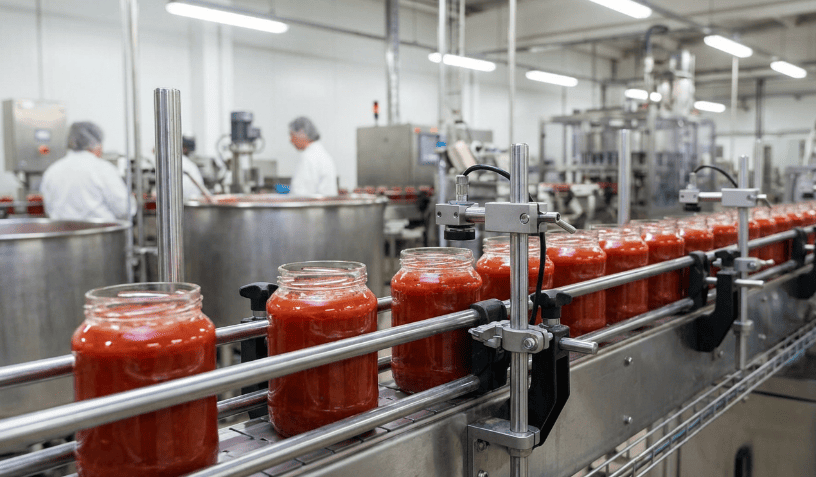
In modern food manufacturing, performance matters as much as formulation. Ingredients need to prove themselves in automated, high-speed production environments where seconds count and consistency is expected.
Among hydrocolloids, xanthan gum has earned its place as a functional ingredient. It delivers viscosity control, stability, texture enhancement, and processing efficiency across an diverse range of product categories.
From Fermentation to Function: What Xanthan Gum Is
Xanthan gum is a high-molecular-weight polysaccharide produced through fermentation using the bacterium Xanthomonas campestris. The resulting biopolymer exhibits excellent stability across a wide range of temperatures and pH levels.
What sets it apart from synthetic thickeners is its natural fermentation origin. This distinction matters more than ever as scrutiny of ultra-processed foods continues to intensify across consumer markets.
Regulatory authorities worldwide have also long recognised its safety profile. The European Food Safety Authority (EFSA) reaffirmed the safety of xanthan gum as a food additive in 2017. The U.S. Food and Drug Administration (FDA) lists it as Generally Recognised as Safe (GRAS).
For manufacturers targeting vegan, non-Genetically Modified Organism (GMO), and clean-label segments, xanthan gum ticks all the right boxes. It aligns with both regulatory requirements and consumer expectations.
Why Factory Managers Care: The Science of Pseudoplasticity
Shear-Thinning Properties in Automated Production
Here's where xanthan gum gets interesting from an operations perspective. It exhibits what food scientists call pseudoplastic, or shear-thinning behaviour.
This sounds academic until you understand what it means on the factory floor. Xanthan gum's viscosity drops under mechanical stress—pumping, mixing, high-speed filling—then recovers almost instantly when that stress is removed.
A sauce containing xanthan gum will flow easily through pumps and filling heads during production. Yet it appears thick and stable once sitting in the bottle or tray. The result? Less splashing, fewer inconsistent fill weights, and faster production runs with fewer clean-downs.
For operations teams juggling tight schedules and efficiency targets, this translates directly into smoother batch-to-batch consistency. It also means less downtime, which matters when you're running high-volume lines.
Thermal and pH Stability
But pseudoplasticity is only part of the story. Few hydrocolloids can match xanthan gum's resilience across extreme processing conditions.
It maintains high viscosity at relatively low use levels. It holds that viscosity over a wide pH range—typically from around pH 2 to 11. This works whether you're running hot-fill lines or chilled processing.
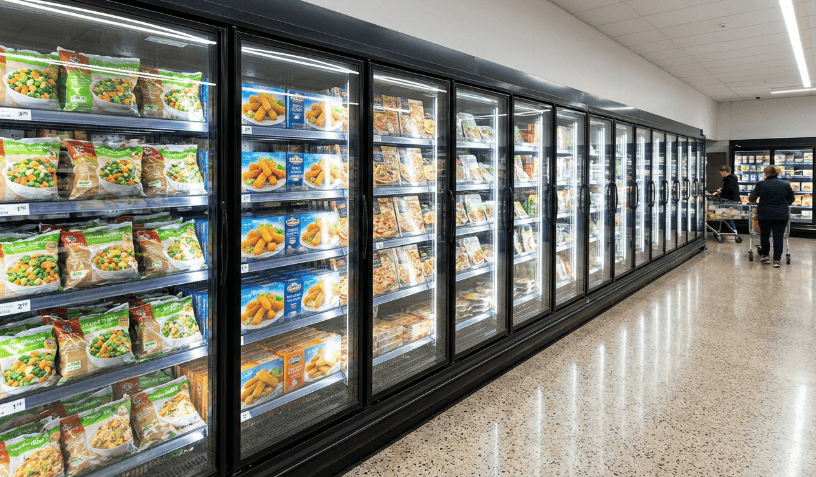
Research on starch–xanthan systems has demonstrated improved freeze–thaw stability. Products show significantly reduced water separation compared with starch alone, which matters for frozen and chilled applications.
For manufacturers of acidic dressings, frozen ready meals, and refrigerated sauces, this combination of benefits adds up. Your formulation will perform reliably through mixing, pasteurisation, freezing, distribution, and reheating.
The practical outcome? Fewer formulation adjustments when scaling from pilot batches to full industrial production. Both procurement and research & development teams would appreciate this consistency.
The Power of Synergistic Blending: Why 1 + 1 = 3
Food chemists rarely use xanthan gum in isolation, and for good reason. Its molecular structure allows it to interact with other gums in ways that create functionality greater than the sum of the parts.
Xanthan + Guar Gum: Cost-Effective Performance
Take the classic combination of xanthan gum with guar gum. Even very small additions of xanthan can dramatically increase the apparent viscosity and "body" of the blend.
Rheological studies show that xanthan–guar systems can transition from a simple macromolecular solution to a more structured, gel-like system. This happens at surprisingly low xanthan levels, delivering rich, clingy textures ideal for sauces and dressings.
For formulators, this means you can reduce total gum usage while achieving better cling and stability. This is particularly valuable in high-shear processed sauces where texture needs to hold during aggressive mixing.
In 2026, with ingredient costs under constant pressure, this blend offers a practical way to balance performance and economics. You don't have to compromise on quality to hit your cost targets.
Xanthan + Locust Bean Gum (LBG) or Konjac: Structured Gels
The synergy shifts when you pair xanthan with locust bean gum (LBG) or konjac. Instead of just thickening, these combinations produce elastic, thermally reversible gels.
Classic research on xanthan–LBG systems also demonstrated something interesting. Heating and cooling mixtures of these two non-gelling components can produce elastic gels, even though neither forms a gel on its own.
Today, modern application guides highlight xanthan–konjac and xanthan–LBG systems as particularly useful for vegan confectionery and structured plant-based meats. These blends create a firm yet sliceable gel that softens pleasantly on heating—ideal for products that need to hold their shape cold but become tender when warmed. They enable the creation of plant-based gummy candies, cold-set meat analogues, and layered desserts—all without relying on animal-derived gelatine.

2026 Market Drivers: Plant-Based and Gluten-Free 2.0
The conversation around plant-based and gluten-free products has matured considerably. Early iterations were often focused on simply "making it hold together."
Today's consumers expect a genuinely satisfying sensory experience—not just a functional substitute. This shift is driving new demands on ingredient performance, and xanthan gum is proving its worth in both plant-based and gluten-free applications.
Replicating Mouthfeel in Alt-Dairy
In alt-dairy beverages—oat, soy, almond, coconut, and other plant-based milks—xanthan gum helps build a smooth, slightly creamy mouthfeel. It does this by increasing low-shear viscosity and improving flavour release.
Its ability to suspend particles and stabilise emulsions further keeps cocoa, proteins, and added nutrients evenly dispersed throughout shelf life. This reduces the sedimentation and serum separation that make products look unappetising or spoiled—even when they're perfectly safe to drink.
For alt-dairy producers, this translates into improved consumer acceptance, easily achieved without increasing fat content or adding expensive protein isolates.
The Gluten-Free Binder and Moisture Retention Agent
The gluten-free baking challenge is different but equally demanding. Xanthan gum acts as a structural binder in gluten-free formulations, effectively replacing the viscoelastic network that gluten normally provides.
Studies on cereal matrices report that xanthan improves water retention and reduces cooking losses. In baked goods, this translates into softer crumbs and slower staling.
By forming a weak network within the starch–protein matrix, xanthan helps compensate for the absence of gluten. This reduces the dry, crumbly texture that has plagued industrial gluten-free products for years.
For industrial bakeries, fine-tuning xanthan level and particle size can make the difference. It's what separates a gluten-free stock-keeping unit (SKU) that customers buy again from one that generates returns and complaints.
The Fish Eye Problem: Practical Solutions for Dispersion
Despite its benefits, xanthan gum can be challenging to disperse; if added too quickly to water, it tends to form stubborn clumps (“fish eyes”) that hydrate on the outside while remaining dry inside.
Despite all its benefits, xanthan gum does have one well-known handling challenge. If added too quickly to water, it forms stubborn clumps—affectionately known in the industry as "fish eyes."
These clumps hydrate on the outside while remaining dry inside. They're very difficult to break down and can create quality issues in finished products if not handled properly.
Dispersion Techniques
Over time, processors have developed effective strategies to address the “fish eyes” challenge. One increasingly popular approach is to use agglomerated or instantised xanthan grades.
In these products, the particles are engineered to wet more readily and disperse with less shear. These quick-dispersing grades reduce hydration time and improve batch-to-batch consistency.
They’re particularly attractive for plants running short hydration windows or high-throughput beverage lines. The time savings can be substantial when processing hundreds of batches per week.
Pre-Blending Strategies
Simple pre-blending strategies can also make a significant difference. Technical guidance often recommends first mixing xanthan gum with a dry carrier like sugar or salt before adding it to water.
Alternatively, dispersing it in a small amount of oil beforehand can separate particles and prevent clumping. Many food factories also dose xanthan at high-shear points in the process—for example, directly into an inline mixer. This would ensure rapid dispersion before viscosity builds.
Clean Label Credentials in an Ultra-Processed Foods (UPF)-Sensitive Market
With public debate around ultra-processed foods (UPF) intensifying—particularly in Europe—formulators increasingly need ingredients that combine robust functionality with a compelling origin story. Xanthan gum fits this requirement well.
As a high‑molecular‑weight polysaccharide, it’s produced through controlled aerobic fermentation of carbohydrates by Xanthomonas campestris, followed by recovery and drying. It's not a synthetic petrochemical derivative.
Many commercial grades are certified as vegan and non-GMO. These are attributes that ingredient suppliers are highlighting more prominently in their marketing, and for good reason.
Regulatory agencies have consistently reaffirmed its safety profile over decades of use. EFSA re-evaluated xanthan gum (E415) as a food additive and concluded that there was no need for a numerical Acceptable Daily Intake.
The agency found no safety concerns for the general population at typical exposure levels. The same opinion noted there's no safety concern for its use in foods for special medical purposes for infants and young children.
The US FDA lists xanthan gum as GRAS for specified uses. It's also widely accepted in international standards such as the Codex Alimentarius.
For manufacturers navigating the complex landscape of consumer expectations, Non-Governmental Organisation scrutiny, and retailer sustainability scorecards, this combination matters. Clean-label positioning, broad regulatory acceptance, and strong toxicological support make xanthan gum a defensible choice.
Designing with Xanthan Gum in 2026: Final Thoughts
For today's food manufacturers, xanthan gum’s real value lies in its predictability and versatility. Think of it as a controllable texture engineering tool rather than a generic thickener.
It delivers consistent results across varying pH levels, temperatures, and mechanical stresses. This makes it ideal for modern, highly automated production environments where consistency is expected.
Its shear-thinning behaviour makes it perfect for high-speed lines. Its freeze–thaw stability ensures products maintain quality through global cold chains that can involve multiple temperature transitions.
When blended synergistically with other gums, it unlocks "1 + 1 = 3" effects. These support indulgent textures, clean sliceability, and better cost-in-use in plant-based and gluten-free systems.
And its fermentation origin, strong safety dossier, and availability in vegan, non-GMO grades provide a compelling narrative. This matters when customers are navigating clean-label and UPF debates with increasingly informed consumers.
For research & development teams and production managers looking to optimise formulations in 2026, the path forward involves working closely with a specialist ingredient supplier. A partner who understands specific application challenges in the road ahead.
Getting grade selection right, developing an effective dispersion strategy, and exploring synergistic blends can unlock significant gains. We're talking improvements in mouthfeel, stability, and line efficiency—all without sacrificing label acceptance or regulatory peace of mind.
In a market where texture, clean label, and operational efficiency all matter equally, xanthan gum remains one of the most versatile ingredients available. It's proven, it's predictable, and it performs across the wide range of modern food manufacturing challenges.