
Caustic potash, chemically known as potassium hydroxide (KOH), is an important industrial chemical with expanding applications across fertilisers, battery electrolytes, and food processing sectors. With strong alkalinity and high solubility, caustic potash serves as both a reactant and a process enabler across multiple industries. In recent years, the global caustic potash market has experienced a resurgence driven by the demand for precision agriculture, the expansion of electric mobility, and increasingly stringent quality standards in food manufacturing.
Chemistry and Production Landscape
Caustic potash is an alkali metal hydroxide produced primarily by the electrolysis of potassium chloride (KCl) solution using either the diaphragm, membrane, or mercury cell process. The membrane cell technology is the prevailing technology due to its high-purity output and lower environmental footprint. This process involves passing an electric current through a potassium chloride brine solution, yielding potassium hydroxide (KOH), chlorine gas (Cl₂), and hydrogen gas (H₂) as co-products.
Consequently, the global industry has shifted towards membrane electrolysis units over mercury cells due to environmental regulations restricting mercury emissions. The transition, encouraged by stricter sustainability policies in Europe and Asia, ensures the production of food-grade and battery-grade potassium hydroxide that meet high-purity standards.
1. Fertiliser Applications: Supporting Nutrient-Efficient Agriculture
Potassium Hydroxide as a Potash Source
In agriculture, caustic potash plays a dual role: as a direct potassium nutrient and as a precursor in formulating liquid fertilisers and pH regulators. Potassium, being one of the three essential macronutrients (NPK: Nitrogen, Phosphorus, Potassium), contributes to osmotic regulation, enzyme activation, and carbohydrate metabolism in plants. Caustic potash offers a highly soluble and readily available source of potassium ions, allowing for precise nutrient management in high-value crops.
Sustainability and Controlled Nutrient Delivery
Unlike conventional muriate of potash (KCl), caustic potash-based fertilisers exhibit lower chloride content, making them suitable for chloride-sensitive crops such as tobacco, potatoes, and citrus. The trend towards chloride-free formulations and liquid fertiliser systems positions caustic potash as a valuable ingredient in drip irrigation and foliar spray solutions.
The rise of smart agriculture and fertigation systems has further increased demand for liquid caustic potash-based fertilisers. These formulations allow better nutrient uptake efficiency, reduction in soil salinity, and pH balancing, essential for sustainable crop productivity.
Case Example: Indian Market Dynamics
According to IMARC Group (2024), the Indian caustic potash market is expanding steadily with agriculture accounting for over 35% of total domestic consumption. The government’s focus on sustainable soil health and precision farming technologies under initiatives such as the National Mission on Sustainable Agriculture (NMSA) has encouraged the adoption of high-purity potassium compounds. This trend mirrors the broader global market, where caustic potash is forecasted to grow at a CAGR of 4.2% from 2024 - 2030.
In summary, the agricultural segment remains the main driver of caustic potash demand, with the industry’s shift toward efficient nutrient delivery and environmental compatibility reinforcing caustic potash’s essential role in modern farming.
2. Battery-Grade Applications: Powering the Energy Transition
Caustic Potash in Electrochemistry
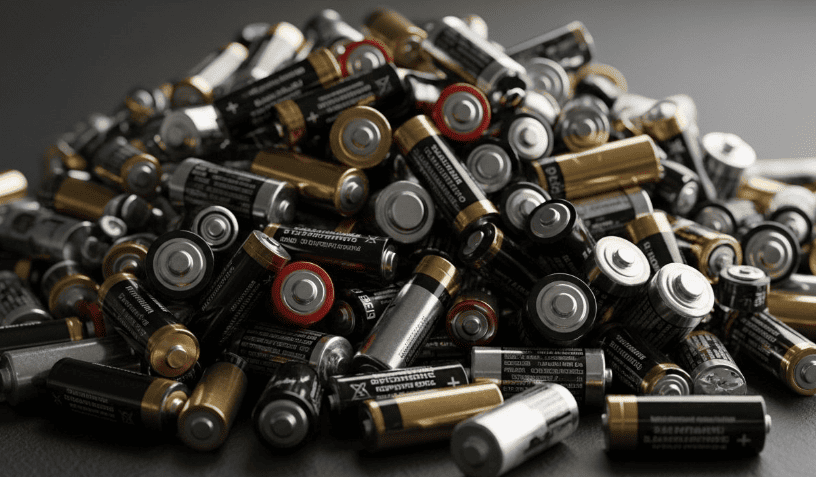
Battery-grade caustic potash has become a key compound in advancing energy storage technologies. Its strong ionic conductivity and stability make it a preferred electrolyte for alkaline batteries, including nickel–cadmium (Ni-Cd) and nickel–metal hydride (Ni-MH) systems. It functions as the electrolyte medium that enables the transport of hydroxide ions between electrodes, maintaining charge balance during electrochemical reactions.
Caustic potash’s chemical inertness and high solubility in water also enhance the conductivity of electrolytes. This further reduces internal resistance and enables high energy density and consistent discharge profiles. Additionally, the shift toward renewable energy systems has intensified research into caustic potash-based electrolytes for advanced zinc–air and fuel cell technologies, highlighting the compound’s potential in future green energy storage solutions.
Market Growth and Research Innovations
The global caustic potash battery market is experiencing a sharp upturn driven by electric mobility and grid energy storage. Technavio’s review in April 2025 projects a CAGR of 3.3% through 2029, driven primarily by expanding battery manufacturing in China, India, and the United States.
Recent research developments have also explored solid-state hybrid electrolytes combining polymer matrices with caustic potash-doped interfaces to improve ionic mobility and safety in next-generation alkaline batteries. Studies also suggest that potassium compounds could be recovered and reprocessed from wastewater and spent industrial by-products, like batteries, aligning with circular economy goals and reducing production costs.
Case Study: Industrial Battery Sector
Following these innovations, the demand for caustic potash in the industrial battery sector continues to grow steadily due to the expansion of nickel-based battery manufacturing facilities across the Asia-Pacific, particularly in countries like India, which supports the domestic manufacturing of batteries and other industrial products.
While Lithium-ion (Li-ion) batteries present a long-term alternative, the immediate need for high-purity caustic potash in established industrial applications and hybrid electric vehicles (HEV) continues to ensure its market value. This, in turn, creates a specific investment opportunity within the overall caustic potash market globally.

3. Food-Grade Applications: Ensuring Safety and Quality
Role in Food Processing
Food-grade caustic potash is widely used as a pH regulator, stabiliser, and emulsifying agent in the food and beverage industries. Its ability to neutralise acids, control acidity, and aid protein solubilisation makes it a key ingredient in chocolate processing, soft drink formulation, and thickener modification.
Compared to sodium hydroxide, caustic potash offers milder taste effects and a lower sodium content, aligning with the growing consumer preference for low-sodium and potassium-enriched products.
The US Food and Drug Administration (FDA) and European Food Safety Authority (EFSA) have classified caustic potash as a Generally Recognised as Safe (GRAS) food additive when used within prescribed limits. The food-grade segment typically requires minimum purity levels of 95–99%, low chloride content, and compliance with ISO 9001 and FSSC 22000 standards.
Case Study: Food-Safe Alkalising Agent
A notable case study highlighting the application of food-grade caustic potash in food emulsifiers is documented in the study titled Study of nano emulsions using carvacrol/MCT-(Oleic acid-KOH) by E. Santamaría, published in 2023. This research investigates the use of caustic potash in the preparation of nano emulsions, which are crucial for enhancing the stability and shelf life of food products. The study found that neutralising oleic acid with caustic potash during the emulsification process alters the spontaneous curvature of the interface, leading to improved emulsion stability and extended shelf life. These findings underscore the performance benefits of caustic potash as a food-safe alkalising agent in emulsifier formulations.
Challenges and Opportunities
Despite promising growth, caustic potash producers face logistical challenges and energy cost volatility due to the electricity-intensive nature of the electrolysis process. To counter this, new plants are fitted with renewable energy facilities or hydrogen co-production systems. These modern systems would allow energy integration and carbon reduction in the long run.
The future market is expected to be characterised by technological modernisation, purity enhancement, and diversification into eco-friendly derivatives such as potassium carbonate and potassium silicate, both produced from caustic potash as an intermediate.

Final Thoughts: A Future Built on Purity
Caustic potash stands at the intersection of chemistry, sustainability, and industrial transformation. From supporting precision agriculture to powering modern energy systems and ensuring food safety, caustic potash remains a strategic enabler of next-generation industries.
Ongoing advancements in membrane technology, regulatory alignment, and integration of renewable energy into production processes promise to make caustic potash manufacturing more sustainable and economically viable. The increasing demand for caustic potash, driven by fertilisers, batteries, and food-grade applications, also reinforces its relevance in industrial applications as we transit towards a more resilient, low-carbon, and food-secure global economy.
About Masda Chemical
Masda Chemical is a well-established company headquartered in Singapore since 1975. It operates primarily as an importer, exporter, and stockist of food ingredients and industrial chemicals. Representing a group of manufacturers and trading organisations known for their high-quality products, the company caters to diverse, specialised needs across multiple industries in the Asia region. Its extensive network includes sales offices in China, Indonesia, Malaysia, Thailand, and Vietnam, enabling efficient service and regional reach.