
Starches are at the centre of this transition. Modified tapioca starch, a chemically modified starch, represents a refined ingredient in this category: one engineered to deliver superior performance, yet compatible with clean-label demands. Unlike other chemically modified starches (which often require E-number labelling), many modern tapioca starch modifications rely on physical and enzymatic techniques. These methods finely tune functional properties — such as thermal stability, pasting behaviour, rheology, and digestibility — while still allowing them to be declared simply as “tapioca starch.”
This article explores the core scientific mechanisms, recent research, and structure–function relationships, to demonstrate how modified tapioca starch supports clean-label product innovation.
Tightening Clean-Label Expectations
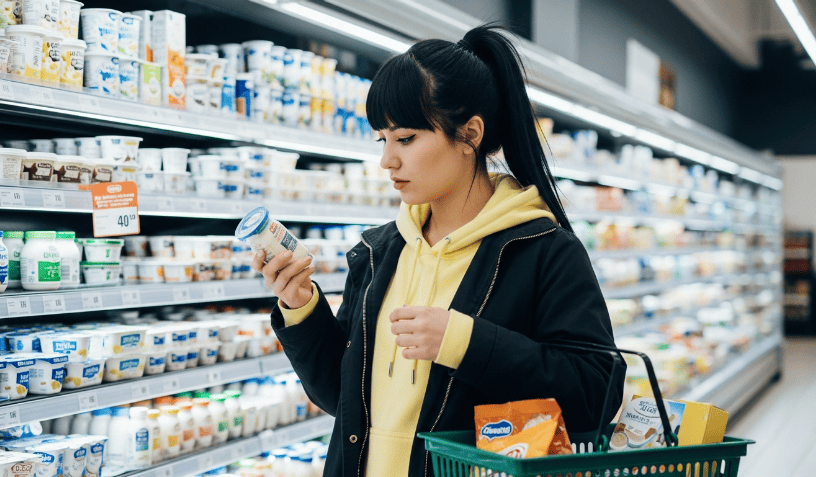
The concept of clean labelling has evolved from a niche marketing trend into a central requirement in contemporary food product development. According to the proprietary ATLAS study, approximately 99% of European food manufacturers consider clean-label positioning essential to their overall business strategy, with nearly 87% actively reformulating existing products or launching new offerings with clean-label claims. Complementary consumer research indicates that a substantial proportion of shoppers routinely examine ingredient declarations and commonly associate clean-label products with shorter, recognisable ingredient lists, enhanced transparency, and superior perceived quality.
These expectations are particularly pronounced within health-oriented food categories, including dairy products, dairy alternatives, and “better-for-you” snack segments. In such categories, consumers increasingly prioritise naturalness, minimal processing, simplified ingredient statements, and the avoidance of additives perceived as “chemical-sounding.” Consequently, food formulators are under growing pressure to eliminate or replace conventional modified starches and texturising agents identified by E-numbers, while maintaining functional performance, sensory quality, and product stability.
Native Versus Modified Tapioca Starch
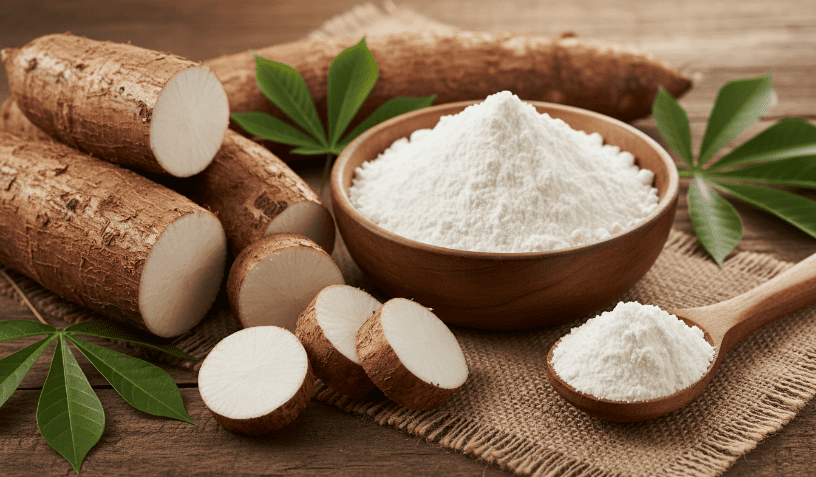
Tapioca starch, obtained from cassava (Manihot esculenta), is inherently gluten-free, organoleptically neutral, and hypoallergenic, making it highly suitable for clean-label formulations and allergen-sensitive applications. In its native form, tapioca starch offers high paste clarity, a bland flavour profile, and the ability to form soft, elastic gels. These functional characteristics have led to its widespread use in gluten-free bakery products, confectionery, sauces, and snack applications.
Despite these advantages, native tapioca starch exhibits functional limitations under demanding processing and storage conditions. It is susceptible to viscosity breakdown under high shear, thermal instability during retort processing, and textural degradation during freeze-thaw cycles or prolonged storage. To address these constraints, modified tapioca starches are commonly employed. Such modifications - achieved through physical, enzymatic, or chemical treatments, including cross-linking and stabilisation are designed to enhance viscosity stability, improve tolerance to processing stresses, and extend shelf-life performance.
What does Modified Tapioca Starch mean in a Clean-Label World?
1. Mechanisms of Clean-Label Modification
Traditionally, the term “modified” refers to chemical substitutions (such as acetylation or cross-linking) that require E-number declarations and often raise consumer concerns. In contrast, clean-label modified tapioca starches are typically produced through non-chemical methods - such as physical or enzymatic treatments applied to native tapioca starch.
a) Physical Modifications- Hydrothermal treatments: Heat-moisture treatment (HMT) and annealing are widely employed to reorganise the internal crystalline structure of starch granules. By controlling moisture content (e.g. 10-30%) and temperature (below gelatinisation), amylopectin chains can realign, producing a starch with higher thermal stability, reduced swelling, and more predictable pasting.
- Pre-gelatinisation: Techniques such as drum-drying, spray cooking, extrusion, or roll drying partially gelatinise the starch, so that it can hydrate rapidly in cold water. This is valuable in instant foods or applications where rapid thickening is needed.
- High-pressure treatments: High-hydrostatic pressure and pulsed electric fields can reorganise starch granules without chemical cross-linking, altering their pasting behaviour and rheology.
- Ultrasound: Application of ultrasonic energy can create microstructural changes (e.g. internal fissures, partial fragmentation) that increase hydration rates, modify viscosity, and enhance freeze–thaw stability.
- Enzymes such as branching enzyme or debranching enzymes are used to alter chain lengths, create more branch points, or selectively remove amylose/amylopectin regions. The result can be starch with slow-digesting fractions (increased resistant starch or slowly digestible starch), leading to modified metabolic profiles.
- Enzymatically treated starch often shows increased SDS (slowly digestible starch) and RS (resistant starch) content compared to native starch.
These strategies allow manufacturers to generate starches that perform like chemically modified ones (e.g. high shear tolerance, freeze–thaw stability), but without synthetic reagents.
2. Functional Advantages in Food
Due to their tailored physicochemical properties, modified tapioca starches offer specialised functionality in food formulations. Key benefits include:
- Shear, heat, and acid tolerance: Through cross-link-equivalent performance (via physical restructuring), these starches remain stable under high-shear mixing or acidic sauces.
- Freeze–thaw stability: Modified tapioca starch can resist syneresis (water separation) after freeze-thaw cycles, making it suitable for frozen foods like bakery fillings, soups, or prepared meals.
- Rapid cold hydration: Pre-gelatinised clean-label starch enables fast thickening without the need for heating, useful in instant preparations.
- Emulsion stabilisation: In dressings or dairy-like emulsified foods, starch can act as a stabiliser, maintaining viscosity and droplet suspension.
- Texturising in bakery and meat: Modified starch contributes to moisture retention, softness, and binding in doughs, fillings, and processed proteins.
3. Recent Research Highlights
Academic and industry research has focused on creating starches with predictable industrial performance via greener modification routes:
- Physically modified and pregelatinized tapioca: work on pregelatinized tapioca shows improved instant functionality and specific texture attributes in bakery and snack applications. Such processing methods (drum drying, extrusion) create water-soluble starches without chemical reactants.
- Dual modification strategies: combinations of physical and enzymatic treatments can improve pasting, thermal stability, and reduce retrogradation (staling), with papers documenting microstructural and thermal changes that correlate with better shelf life and mouthfeel. These dual methods can mimic the benefits of chemical cross-linking while remaining “clean” by label definition.
- Enzymatic branching and targeted hydrolysis: enzymatic approaches (e.g. highly branched starch produced by branching enzymes) offer a green route to modify rheology and digestibility. Emerging studies show enzymatically altered tapioca can deliver improved water/oil absorption and tailored viscosity profiles with a lower environmental footprint than chemical modification.
For formulators, the takeaway is that the toolkit for producing high-performance tapioca starches without chemical residues is maturing fast — offering consistent, scalable solutions for industrial production.
Challenges, Trade-offs, and Scientific Limitations
While clean-label modified tapioca starch offers many advantages, developing and using it involves certain considerations at the molecular and functional level:
- Lower modification efficiency: Physical processes may not achieve the same degree of cross-linking or stabilisation as chemical modifications; as a result, functionality improvements may be more modest and require higher usage levels.
- Cost and scalability: Implementing physical or enzymatic modification (e.g. high-pressure treatment, ultrasound) demands specialised equipment, which can be cost-prohibitive for small-scale producers.
- Digestibility–structure trade-off: Enzymatic branching to create resistant starch is beneficial nutritionally but may reduce peak viscosity or alter gel texture. Optimising the balance between functional performance and digestibility requires careful selection of enzymes and process design.
- Limited market penetration: Despite the growing interest, physically or enzymatically modified “clean-label” starches still represent a small fraction of the total modified starch market. One review estimated they comprise only ~5% globally.
- Regulatory & labelling complexity: Even though many clean-label modified tapioca starches can be declared simply as “tapioca starch,” regional regulatory frameworks differ, and some jurisdictions may require specific labelling disclosures or standards.
Scientific Outlook and R&D Opportunities
As clean-label demand grows, further innovation is needed to enhance tapioca starch performance in high-acidity, high-temperature, and extended-shelf-life applications. The key focus areas include:
- Nano- and microstructure analysis: Advanced microscopy (e.g. atomic force microscopy, Scanning Electron Microscopy) and spectroscopy can further elucidate how granule morphology correlates with rheology, informing rational process design.
- Interplay with other biopolymers: Studying interactions between modified tapioca starch and proteins (e.g. plant proteins), gums, or fibres can help design ingredient systems with synergistic stability, texture, and nutritional profiles.
- Sustainability optimisation: As clean-label starches scale up, research must also focus on energy-efficient processing (e.g. lower-pressure annealing, enzymatic methods with reduced water usage) to reduce their environmental footprint.
Conclusion: Positioning Modified Tapioca Starch in Clean- Label Strategy
In the scientific domain, modified tapioca starch now sits at the confluence of innovation and consumer demand. Through physical (non-chemical) and enzymatic modification, food scientists can tailor its structural, thermal, and digestive properties to meet the stringent performance criteria of modern food systems - while still offering a clean-label declaration.
This molecular precision translates directly into enhanced functional stability in food products: from sauces that resist separation, to frozen desserts that withstand thawing, to bakery goods with superior moisture retention. Still, challenges remain: process complexity, cost, regulatory variation, and achieving the optimal balance between structure and function are equally important. But ongoing research - particularly into enzymatic and hybrid modification techniques - is rapidly pushing the boundaries of what clean-label tapioca starch can achieve.
For food formulators and ingredient buyers, understanding these scientific intricacies is critical. It allows informed selection of starch types based on required functionalities (thermal tolerance, freeze stability, digestion rate), application matrix, and labelling strategy. For research and development teams, continuing to innovate in modification technology offers a path to next-generation starch ingredients that deliver performance, transparency, and sustainability in equal measure.