
This article provides a review of potassium sorbate’s benefits and hazards as a preservative. It integrates toxicology, exposure data and industry practices to evaluate its use as a food preservative while discussing strategies to minimise human exposure and maintain food safety.
Potassium Sorbate and Microbial Inhibition
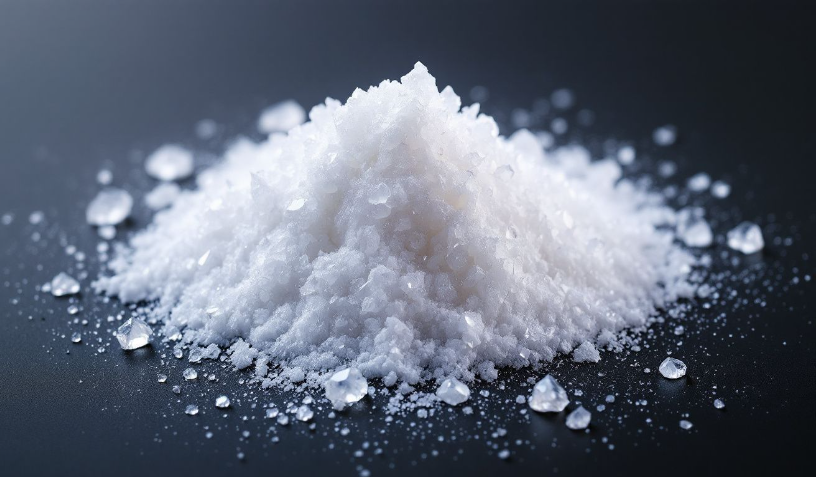
Chemically, potassium sorbate is potassium 2,4-hexadienoate. As pH values commonly found in preserved foods are acidic to near-neutral, an equilibrium exists between the sorbate ion and undissociated sorbic acid. The antimicrobial activity is largely attributable to the undissociated (protonated) form, which can traverse microbial cell membranes and dissociate intracellularly. The resulting intracellular acidification and perturbation of cytoplasmic membrane integrity impair adenosine triphosphate generation and enzyme function, especially in fungi (moulds and yeasts) and certain Gram-positive bacteria; this explains why potassium sorbate is particularly effective as an antifungal preservative. The mechanism also clarifies why potassium sorbate is often paired with pH control: lower pH increases the undissociated fraction and enhances efficacy at lower potassium sorbate concentrations.
Toxicology and Genotoxicity: Reviewing the Evidence
Acute toxicity of potassium sorbate is low — oral LD50 values in rodents are high relative to common human dietary exposures. The toxicological literature is more nuanced for chronic and genotoxic endpoints. A comprehensive review collated in vitro assays and animal studies demonstrated that very high exposures (often greatly exceeding realistic dietary intake) can yield oxidative stress markers, DNA strand-breaks, chromosomal aberrations, and sister chromatid exchanges in selected models. Mechanistically plausible metabolite-mediated pathways have been proposed to explain these observations; however, most positive genotoxic signals are dose-dependent and occur in the high-dose experimental range used to define hazard rather than typical human risk. This emphasises the classic toxicology maxim: “the dose makes the poison.”
Safety Assessments: What Do Regulators Say?
International agencies have extensively reviewed potassium sorbate’s safety. The US Food and Drug Administration (FDA), the Food and Agriculture Organization of the United Nations (FAO), and the European Food Safety Authority (EFSA) all categorise potassium sorbate as "generally recognized as safe" (GRAS) within regulated usage. The EFSA, for instance, sets an acceptable daily intake at 25mg/kg bodyweight, and most adults do not approach this threshold in their everyday diet.
Notably, a 2024 compositional survey published in the Journal of Food Composition and Analysis measured potassium sorbate concentrations across product categories and applied Monte Carlo probabilistic modelling to estimate population exposures; mayonnaise and certain sauces emerged among matrices with higher potassium sorbate levels. While the modelling showed that average adult exposures typically remained below established acceptable daily intake (ADI) thresholds, small-bodied children or consumers who habitually ingest multiple potassium sorbate-containing products — could approach or in isolated cases exceed conservative guidance values. These findings underscore the importance of continued surveillance and targeted exposure assessment for vulnerable subgroups.
Peering Beneath the Surface: Recent Research and Case Studies
Though regulatory consensus supports potassium sorbate’s safety, recent studies - especially in lab and animal models - highlight potential effects that have prompted renewed scientific scrutiny.
Long-Term Animal Exposure: Immune and Liver Effects
A 2024 study exposed healthy mice to varying concentrations of potassium sorbate for 10 weeks. It found no significant changes in organ weight or basic metabolism, but did report increased inflammatory markers in the liver and shifts in gut microbiota. Notably, when potassium sorbate was removed from the animals’ diet for five weeks ("washout" period), these changes reversed, suggesting potential for recovery and little evidence of cumulative harm with transient exposure.
Case Perspective: The Real World
Inhibiting Yeast & Mould Growth: Dairy & Beverages
Acidic milk-based beverages and certain yoghurts are vulnerable to yeast and mould growth during storage. Industrial formulators often incorporate potassium sorbate at validated concentrations as part of a multi-hurdle system — combining hygienic processing, pasteurisation, aseptic packaging, refrigeration, and potassium sorbate dosing — to reliably control spoilage organisms. A recent study explored synergies between potassium sorbate and novel adjunct antimicrobials (e.g., ZnO nanoparticles) - a promising approach for lowering potassium sorbate’s exposure in consumer diets while preserving the product’s shelf life.
Extending Shelf-Life: Baked goods, Fillings & Condiments
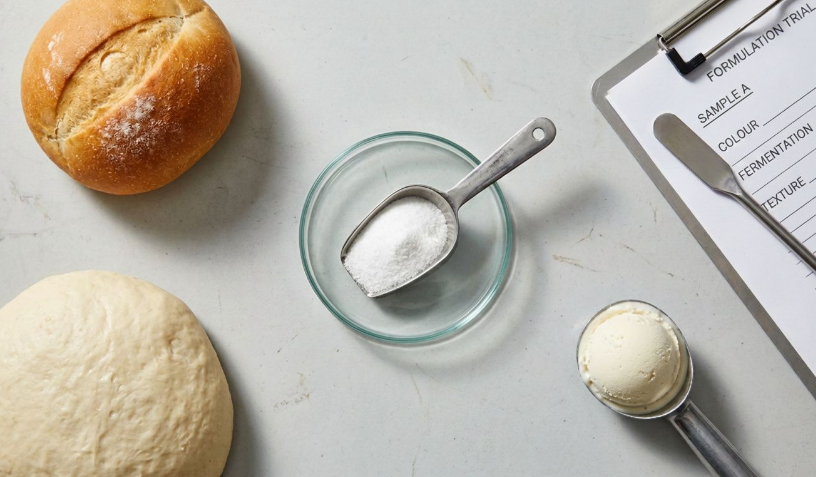
In bakery production lines, potassium sorbate is typically used in water-based fillings, jams, icings, and salad dressings to inhibit surface moulds and yeast during ambient-temperature storage. Potassium sorbate is also often added after emulsion formation in mayonnaises and dressings to ensure even distribution and to avoid localised high concentrations (overdosing) that could influence flavour or regulatory compliance – delivering both economic value and public health protection.
Spotlight on Sustainability & Worker Safety
Potassium sorbate is notable not only for its preservative efficacy but also for its favourable environmental and occupational safety profile. From a sustainability standpoint, it presents a low environmental hazard, as it readily degrades into water and carbon dioxide without producing persistent or harmful residues. Research further indicates that it poses a negligible risk to aquatic organisms and does not bioaccumulate, thereby minimising long-term ecological impact. Its non-toxic character in livestock feed applications reinforces its suitability as a versatile additive across diverse industries.
Nevertheless, sustainable industrial chemistry must also prioritise worker protection. While potassium sorbate is typically used at diluted, low-risk levels in food and beverage processing, handling its pure powdered or granular forms in manufacturing environments requires caution. Direct exposure may irritate the skin, eyes, and respiratory tract, especially when dust is generated during production or packaging. Consequently, companies implement strict occupational safety protocols:
- Personal Protective Equipment (PPE): Gloves, protective eyewear, and dust masks are recommended to prevent irritation and accidental contact.
- Ventilation systems: Local exhaust or general ventilation helps minimise airborne dust, ensuring workers are not exposed to unnecessary respiratory risks.
- Safe handling protocols: Training workers on proper transfer, mixing, and storage reduces the chance of accidental exposure.
By balancing eco-friendly credentials with robust worker safety practices, potassium sorbate demonstrates how industrial chemicals can support both sustainable manufacturing and responsible workplace standards.
The Bottom Line: Vigilance, Moderation, and Ongoing Research.

Balanced Conclusion and Practical Recommendations
Potassium sorbate remains generally a safe and effective solution for food preservation. It supports public health by preventing microbial spoilage and foodborne illnesses. Evidence also indicates low acute toxicity and minimal risk when potassium sorbate is used at regulated levels. At the same time, research warrants caution against potential overexposure, especially in vulnerable populations like children or individuals with sensitivities - potentially contributing to chronic diseases.
Industry can reduce population exposure by adopting preservative-hurdle strategies, improving analytic surveillance, and ensuring transparent labelling for frequently purchased food products. Consumers can further reduce risk by checking labels and limiting consumption of heavily preserved foods. As with many substances in modern science, the question with potassium sorbate is not whether it is absolutely safe or dangerous, but how carefully we continue to assess and regulate its use.
About Masda Chemical
Masda Chemical is a well-established company headquartered in Singapore since 1975. It operates primarily as an importer, exporter, and stockist of food ingredients and industrial chemicals. Representing a group of manufacturers and trading organisations known for their high-quality products, the company caters to diverse, specialised needs across multiple industries in the Asia-Pacific region. Its extensive network includes sales offices in China, Indonesia, Malaysia, Thailand, and Vietnam, enabling efficient service and regional reach.